Friday, December 19, 2025

Avatar: Fire and Ash - Review: Rising from the Ashes


It’s hard to believe that just a few years ago James Cameron (“Terminator 2: Judgement Day,” “Aliens”) returned to the world of Pandora for the first time in thirteen years for the sequel to his mega-blockbuster highest grossing film of all time. Despite claims that the sequel would have “zero cultural impact” and bomb given its $450 million price tag, it once again made waves, generating over $2 billion at the global box office and awards nominations, including one for Best Picture. Now comes the ultimate test: will people show up for another adventure with the Sully family just three years later? And will it be worth the wait and price tag?

“Avatar: Fire and Ash” picks up almost immediately after the events of the previous film, with the Sully family reeling from the death of their eldest son. While traveling with a tribe of merchant Na’vi, they’re attacked by the violent Mangkwan tribe, a group of fire themed Na’vi led by the villainous Varang, played by Oona Chaplin (“The Comey Rule,” “The Hour”). Now separated, Jake Sully, played by Sam Worthington (“Hacksaw Ridge,” “Under the Banner of Heaven”), Neyteri, played by Zoe Saldaña (“Guardians of the Galaxy,” “Emilia Pérez”), their children Kiri, played by Sigourney Weaver (“Alien,” “Ghostbusters”), Lo'ak, played by Britain Dalton (“Dark Harvest,” “Goliath”), Tuk, played by Trinity Jo-Li Bliss (“The Life of Chuck,” “A Really Haunted Loud House”), and their adoptive human son Spider, played by Jack Champion (“Scream VI,” “Everything’s Going to Be Great”), must survive while being hunted by the human RDA military, the Na’vi form of Colonel Miles Quaritch, played by Stephen Lang (“Don’t Breathe,” “Public Enemies”), and Varang.

As expected, Cameron’s latest is a gigantic spectacle that’s difficult to describe in its visual majesty. Even without taking the incredibly detailed motion capture into account, “Fire and Ash” continues the series’ epic swaths of alien, naturalistic beauty and deep technicolor wonder. There are times where it almost seems as though Cameron has taken the observation that modern blockbusters have become too gray or washed out as a persona challenge. There’s a reason that even this franchise’s detractors can’t help but praise the look of these films, and this latest is a continuing example of that. Returning composer Simon Franglen (“Peppermint,” “The Magnificent Seven (2016)”) keeps James Horner’s original melodies alive just as much as he did before, but with new injections of alien, electronic motifs. Like the film itself, it's a familiar score, but an enhanced and broadened one. Cameron’s little Na’vi family continues to deliver the kinds of performances one would expect from a blockbuster of this scope. Worthington continues to deliver as an incredibly heartfelt soldier turned father, Weaver yet again surprises with how well she can play a teenager despite being in her mid 70s, and Saldaña once again turns out a heartbreakingly honest portrait of a woman dealing with an internal battle between her deep grief and her warrior spirit. Truly, her performances in this franchise are the stuff that Oscar nominations are made off, if the Academy ever decided to truly recognize motion capture performances.

What stands out the most in this particular film are Lang and Chaplin. Lang is exploring the fruits that were planted in “The Way of Water” with Quaritch, slowly helping him to evolve into possibly the franchise’s most fascinating character. He becomes a twisted version of the grizzled military man, as Cameron and screenwriters Rick Jaffa (“Dawn of the Planet of the Apes,” “Jurassic World”), Amanda Silver (“Dawn of the Planet of the Apes,” “Jurassic World”), Shane Salerno (“Armageddon (1998),” “Savages (2012)”), and Josh Friedman (“War of the Worlds (2005),” “The Fantastic Four: First Steps”) clearly see more for him than just being the main antagonist. Chaplin is also turning in a truly evil role here as Varang, the sort of villain so easy to hate it becomes fun. She has a clear swagger and energy to her that anytime she pops back up onscreen, she becomes a delight to watch.

What does become increasingly apparent as things continue is that this is a film that feels more like a direct sequel to the previous film than the third in the overall franchise. Eventually it essentially becomes “The Way of Water 2.5,” with some scenes and moments seeming as though they are repeating from the previous film. It’s the most frustrating aspect of the film, yet it somehow still doesn’t drag. There’s still plenty of new explorations made here, both emotional and in the overall narrative of the series. Despite being longer than the previous film, its pacing is somehow even better, resulting in a film that's getting more mileage out of its length. Normally when people say a film feels longer than it is, it's a bad thing. However, with “Fire and Ash” it feels longer simply because it seems impossible to cover the kind of ground Cameron does in the listed length.

Even more than with “The Way of Water,” “Fire and Ash” proves that the “Avatar” series is the largest, most expensive soap opera ever made. For some people, that will always be enough. It’s not just that the drama continues to escalate and complicate with each moment that passes on Pandora. But Cameron is a director who so clearly loves this world and cast of characters that he has created. Yes, it would be so easy for him to just cash a check as the producer of these and sit back and watch them print money. But by having his voice and hand in each of them, he injects them with something blockbuster entertainment is so often missing: sincerity. Not a moment goes by in any of these films where it isn’t apparent that he genuinely cares about what happens to Jake, Neyeteri, Kiri, Lo’ak, Spider, Tuk, Quaritch, or any other character just as much as we do. And that makes all the difference.

“Avatar: Fire and Ash” continues to deliver exactly what fans of the franchise would expect: great performances and visuals wrapped up in gorgeous science fiction locals and melodrama. At this point, it's a series that you’re either on board with or you’re not. For those who are here and committed, Cameron has laid the groundwork for even more interesting things to come in the potential (or inevitable) fourth and fifth films. 4.5/5 

The SpongeBob Movie: The Search For SquarePants - Review: Another Big Screen Adventure for a Big Guy


It’s hard to believe that a little less than a decade ago, a yellow spongy guy premiered his first underwater adventure on televisions nationwide. What followed wasn’t just a beloved TV show, but a merchandising juggernaut that's expanded to theme parks, video games, plush toys, books, clothing, candy, etc. Not only has it been over two decades since the first film, but this latest adventure is now the fourth one for everyone’s favorite porous buddy and his other sea-dwelling miscreants.

“The SpongeBob Movie: Search for SquarePants” follows the titular sea sponge, voiced by Tom Kenny (“Adventure Time,” “Rocko’s Modern Life”), as he learns that he has finally become tall enough to ride a terrifying roller coaster and therefore becoming a “big guy.” After being dissuaded by his boss Mr. Krabs, voiced by Clancy Brown (“Carnivàle,” “Superman: The Animated Series”), SpongeBob becomes even more determined to prove his manliness. This leads him to summon the ghostly Flying Dutchman, voiced by Mark Hamill (“Star Wars,” “Batman: The Animated Series”), who tells him that if he completes a series of challenges, he can make him a true swashbuckling big guy. Unbeknownst to SpongeBob and his friend Patrick, voiced by Bill Fagerbakke (“Gargoyles,” “Coach”), the Dutchman actually wants them to help break his ghostly curse, leading to Krabs, Squidward, voiced by Rodger Bumpass (“Invader Zim,” “Where on Earth Is Carmen Sandiego?”), and Gary the Snail to venture to the ghastly underworld to save SpongeBob and Patrick.

As if it even needs to be said, the voice cast here is more than up to the task. There’s a specific kind of reassurance that comes from watching a group of actors who’ve inhabited the same roles for over two decades. Kenny might be aging a bit, leading to him losing a bit of the squeak in his voice, but the buoyancy and energy is as present as ever. The same can be said for Bumpass, Brown, and Fagerbakke. None of them sound a moment out of step, keeping the feelings of their undersea characters alive and well at each passing moment. Hamill is good, but there’s nothing particularly exceptional about his role that makes it clear why longtime performer of the role Brian Doyle-Murray was recast. An unexpected bright spot is Regina Hall (“Scary Movie,” “The Best Man”) voicing the Dutchman’s assistant Barb. There’s nothing flashy about her performance, just simply turning in some really good cartoonish delivery, and she’s a highlight as a result.

Director Derek Drymon (“Hotel Transylvania: Transformania,” “Hey Arnold!”) has a long and storied history with the television series, even directing one of the most beloved episodes, the series premiere “Help Wanted.” What’s apparent from the first moments is that he simply gets this world, these characters, and this sense of humor basically flawlessly. There’s an ease in everything done that feels like just another day in the life of this Bob and his pals. There’s no overblown tale to set the stage or anything. It just happens to be a larger scale tale than what’s been on the small screen.

The script, written by Matt Lieberman (“The Christmas Chronicles,” “Free Guy”), Marc Ceccarelli (“SpongeBob SquarePants,” “Uncle Grandpa”), Kaz (“SpongeBob SquarePants,” “Camp Lazlo”), and Pam Brady (“South Park: Bigger, Longer & Uncut,” “Team America: World Police”) is quite the mixed bag comparatively. Given the writing team's composition of longtime series writers and newcomers, the humor and general plot are an equally mixed bag. While things are certainly better than the last two films, it lacks the sincerity or self-seriousness that's made the first film such a beloved cult hit even twenty years later. Luckily, the most annoying aspects of the last two films (the forced superhero action of the second and the blatant shoehorning of spinoff material in the third) are absent from this one, letting it breathe and become its own fully formed work.

Humor and plot notwithstanding, this is an exceptionally gorgeous looking animated film. While not as experimental as the likes of “Spider-Verse” or even the previous “SpongeBob” film, it strikes a nice balance between the clean, plastic look of the CGI in “Sponge Out of Water” and the most psychedelic, malleable style of “Sponge on the Run.” The general look of the film plays with forms just like the series does, with hyper-realistic stills, cartoony squishiness, and purposefully exaggerated live-action footage. It’s the best of both of the previous films’ CGI worlds, and just a sumptuous little visual treat.

In general, there’s nothing about this latest silver screen adventure for this subaquatic sea sponge that’s particularly terrible, nor is there anything particularly noteworthy. The animation looks great, the humor is amusing enough, and the voice cast is as good as ever, but it lacks anything novel about it. There’s little here to separate it from the direct-to-streaming Netflix spinoff films that have arrived in the past few years, and it’ll be plenty amusing and satisfying for fans of the series. For others, it's just more "SpongeBob" and likely the franchise's best film since the first, for whatever that’s worth. 3.5/5 

Friday, December 12, 2025

Ella McCay - Review: An Old Fashioned Kind of Gal


When you have a career like James L. Brooks’ (“Terms of Endearment,” “Broadcast News”), it can be hard to be told no. Decades of warmth and comedic dramas have established him as one of the premiere voices in the genre, and that’s even before he helped create a little show called “The Simpsons.” Now, fifteen years after even his most recent directorial feature, he’s returned to the silver screen with a dramady about the political landscape, choked with as many celebrities as he’s ever had in a film. Here’s hoping an 85-year-old guy can still make a movie about a mid-30s career driven woman.

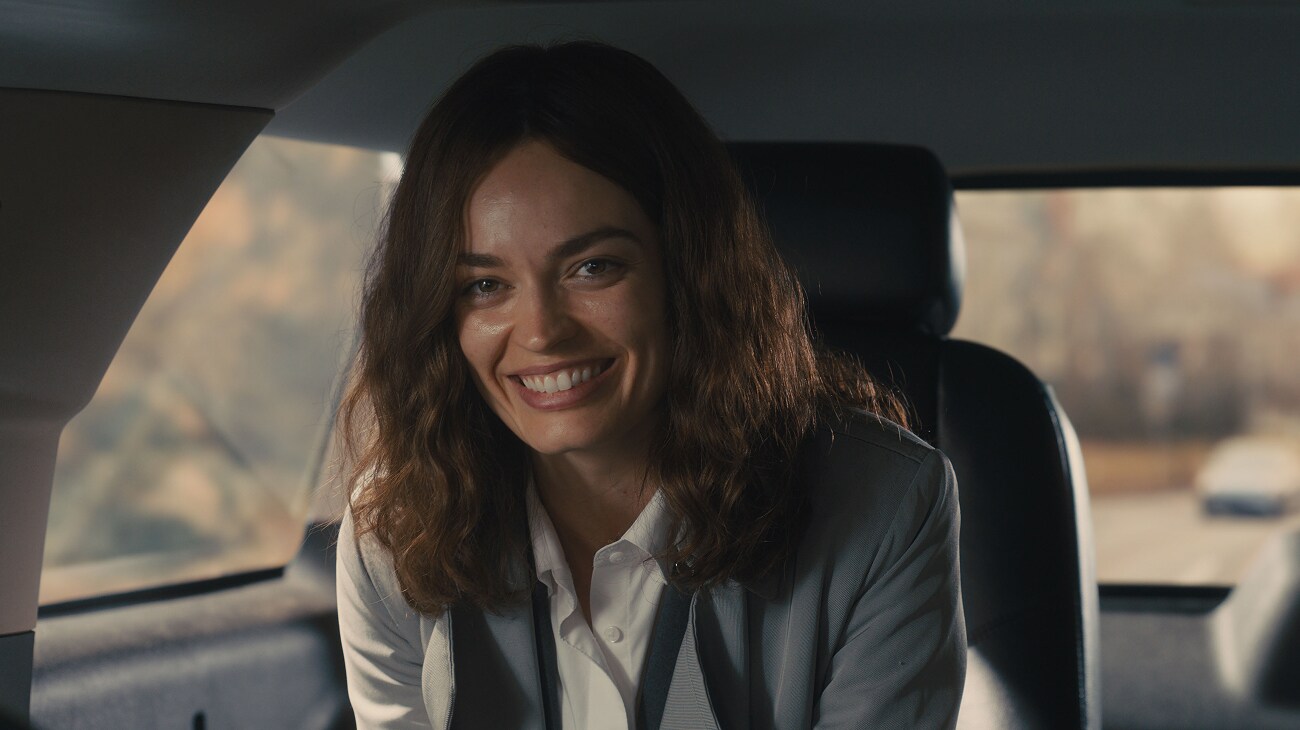
Set in 2008, the film follows the titular Ella McCay, played by Emma Mackey (“Sex Education,” “Death on the Nile”), as she learns she’ll be taking over as Governor from her mentor, the current Governor Bill Moore, played by Albert Brooks (“Broadcast News,” “Finding Nemo”), as he accepts a cabinet position in the current presidential administration. What should be an exciting day for her is marred by various familial strife, including the reappearance of her estranged father Eddie, played by Woody Harrelson (“The Hunger Games,” “Zombieland”), her anxious younger brother Casey, played by Spike Fearn (“Alien: Romulus,” “Tell Me Everything”), and her ticking time bomb husband Ryan, played by Jack Lowden (“Slow Horses,” “Dunkirk”), whom she deals with thanks to the helpful voices of her aunt Helen, played by Jamie Lee Curtis (“Halloween (1978),” “Freaky Friday (2003)”) and assistant Estelle, played by Julie Kavner (“The Simpsons,” “Click”).

Brooks’ films certainly have a very specific kind of appeal. There’s a reason they’re still beloved even decades later. However, much like most of his non-animated post-2000s work, “Ella McCay” has a bit of an identity crisis. This is a film clearly made up of two halves: one half wants to be a family drama/comedy about a, as the characters put it, not normal family. The other half wants to say something about idealism and hope within the political realm. Each have their strengths, but neither mesh particularly well. In fact, most of the time characters seem as though they’re being adjusted on the fly to fit one of the stories versus the other. Make no mistake, things do click into place at numerous points and when they work, they work. But when they don’t, it becomes a film desperately in need of pruning.

Mackey is the best part of the film by a landslide. She somehow balances Ella’s neuroticizes and anxieties into a genuinely endearing and charming portrait of a woman in her 30s who’s struggling with an overabundance of caution and optimism. While not necessarily requiring a lot of effort, Curtis also delights as Aunt Ellen, backing up Ella with sharp motherly wisdom doused in spouts of vulgarity. Brooks, for as brief as his appearances are, proves he still has the same dry wit and charm he did back in the 80s. Kavner is a small delight as well, providing a brief window into the comedy juggernaut she was back in the 80s before permanently becoming America’s animated blue-haired television mom.

Most of the men in Ella’s life are wildly incompetent, and their performances are just as varying. Harrelson is trying to capture some kind of a sad sack, hurt puppy kind of angle with his performance, and it just gets more grating the longer the film goes on. Fearn is best opposite his fictional sibling, and their scenes are some of the best the film has to offer. When he’s away from her, that’s a different story. Meanwhile, Lowden feels like a cartoon villain, and his subplot feels genuinely baffling compared to the rest of the film, as if it was sliced out of some other project and slotted right into this film. Kumail Nanjiani (“The Big Short,” “Silicon Valley”) appears as Ella’s security detail Nash and proves to be a sweet, understated bright spot in the rest of this film’s chaotic plots, and Ayo Edeberi (“The Bear,” “Bottoms”) briefly appears to play the same kind of neurotic characters that propelled her into the spotlight and she does well enough here.

Even at their worst, the cast still does an amiable job together, and the general chemistry does help keep things lively and amusing. It’s a quite amusing film, but Brooks’ script is the film’s biggest weakness. It’s not that the material is bad; it's charming in a dated kind of way. This feels like the sort of film that use to get made all the time, but at no point has anything been changed for a modern movie-going audience. That can be nice, but it also feels far too safe. For example, multiple times people tell Ella she’s the governor “of the state you were born in.” But at no point is any actual place named. When Bill announces that he’s going to be a cabinet member, he simply says to “the president,” with no specificity. Even Ella seems as though she’s designed to be politically ambiguous: one scene has her, a woman who’s working for free programs for under privileged kids and mothers, a very liberal program, state that she voted against medical marijuana.

It’s as if Brooks wanted to make a film about someone in politics but became so terrified of making anyone raise an eyebrow, he scrubbed it of any specificity. That issue the extends to the rest of the film. What’s here is painfully safe. Charming and funny, sure. Well-acted, kind of. But painfully safe. It's admirable that he’s still trying to make the same kind of film he always had, but by doing so he’s made the same kind of film he always has. It’s also simply too long, with too many subplots and added scenes that should have been cut. Sure, Edeberi and Fearnes are charming, but their subplot adds nothing to the overall film and it just keeps going on and on. It is at least a pretty film, with Robert Elswit’s (“There Will be Blood,” “Good Night, and Good Luck”) cinematography managing to drape everything in a gorgeous simplicity that modern studio comedies have been sorely lacking in recent years, and the score from Hans Zimmer (“Gladiator,” “Dune (2021)”) is fun and cheery, if slight.

For a seemingly simple film that they don’t make many of anymore, a critique of “Ella McCay” is anything but simple. It has plenty to like; it's a good-looking film with some charming and charismatic performances that lock in when they get to play with others. Mackey is a terrific lead, and when the film zeroes in on her, it's just delightful. But the script is overstuffed with subplots that lead nowhere, a handful of performances that are weaker than the rest, and a general sense of sameness that prevents things from really soaring. There are rumors that Disney only greenlit this film to get Brooks to make “The Simpsons Movie 2” happen, and if that's the case, we’ll only know if it was worth it after that film releases. Like Ella herself, this is a film with a good heart that tries hard and therefore feels hard to truly dislike. But you can certainly say they don’t make them like they used to. Even Brooks. 3/5 

Dust Bunny - Review: Bryan Fuller's Twisted Little Bedtime Story


If the name Bryan Fuller (“Pushing Daisies,” Hannibal”) means anything to you, it’ll likely be thanks to his years of television work. From creating some of the most imaginative series to the tensest series of the past twenty-five years of TV, his pedigree is long and weird. Now, after decades of work on the small screen, he’s finally getting the opportunity to bring his sense of macabre whimsy to the big screen with a tale befitting of his interests.

“Dust Bunny” follows eight-year-old Aurora, played by Sophie Sloan (“The Chemistry of Death”), whose parents keep mysteriously disappearing in the middle of the night. Hoping to prevent the issue further, she enlists in the help of her next-door neighbor, a man known simply as her concerned neighbor played by Mads Mikkelsen (“Casino Royale,” “Hannibal”), to kill the source of her parents' disappearances: the people eating monster living beneath her bed.

Anyone remotely familiar with Fuller’s previous works should be right at home here in this fairy tale-esque world of macabre wonder. While locations are few, each make a specific impression upon their first appearance. While mostly shot at night, the pops of color are vibrant and fantastic, setting a distinct visual identity for this childhood horror. Cinematographer Nicole Hirsch Whitaker (“One Piece (2023),” “Lioness”) plays with various viewing angles and camera perspectives with a massively wide 3:1 aspect ratio to craft something that, if nothing else, is unlike most films being made nowadays. Backing up this slight-cartoonified adventure is an excellent musical score from composer Isabella Summers (“Lisa Frankenstein,” “Little Fires Everywhere”) that further fleshes out the world; numerous moments have various sound effects activating in time with the music, blending into the score to create an effect similar to the “Merrie Melodies” Looney Tunes cartoons from back in the day.

Given her young age, Sloan’s performance is excellent, and her chemistry alongside Mikkelsen is really fun. They have a distinct “father daughter” vibe to their relationship, and its as if Fuller is pulling from fairy tale stories as well as the likes of films like “Leon: The Professional” or “True Grit.” Mikkelsen’s performance is only slightly less impressive, simply because he’s proven that he can sleepwalk his way through a role like this. It doesn’t rebuke how good he is, but rather his is a more expected quality. The supporting cast has quite a few character actors hamming it up in the best ways; Sigourney Weaver (“Alien,” “Avatar”) pops up as the concerned neighbor’s handler Laverne, David Dastmalchian (“The Suicide Squad,” “Late Night with the Devil”) as an assassin leader targeting the concerned neighbor, and Sheila Atim (“The Woman King,” “The Underground Railroad (2021)”) as Brenda, a child protective services agent looking after Aurora. Weaver is the one who seems to be phoning it in the most, with Atim and Dastmalchian giving just the right degree of half-cartoonish delivery that amps up a world and tale like this.

The sets and production design look fantastic, digging into the gothic, bedtime story kind of vibe that Fuller wants to evoke. The film shares tonal similarities with family horror-fantasy flicks from the 1980s, like “Gremlins” and the slight touches of this whimsy in the environment help build on this. Some scenes have the trees and leaves on the wallpaper in Aurora’s apartment blowing in an unheard breeze, as she pushes herself on a giant metal wheeled hippo as she refuses to touch the floor. The action is similarly stylized, with bright colors and camera flourishes abound. One moment has the concerned neighbor getting knocked through a skylight before falling back into the house via the next skylight over. The practical effects also blend seamlessly with the production design, which makes the handful of digital effects stand out like a sore thumb. While not terrible, it's clear that those are where the budget began to run out, and it shows. Fuller still tries to use them sparingly and hide them with other actors and physical props, but when they do appear in full view, they make the wrong kind of impact.

For those who know exactly what they’re getting themselves into with a Bryan Fuller work, “Dust Bunny” will likely be a highlight of the year. For those unfamiliar with his specific style and worlds, it’ll require quite a bit of suspension of disbelief. However, regardless of which camp you’re in, this is an undeniably unique and stylish film that makes great use of its premise, even as its ambitions seem to outweigh its own budget at times. You’re in safe hands with Fuller, Mikkelsen, and Sloan as they take you on this silly, fantastical, twisted little bedtime story. 4/5

Friday, December 5, 2025

Five Nights At Freddy's 2 - Review: More Maniacal Mascot Malarky


As a certain someone in the titular video game series once said, “I always come back.” And after becoming the highest grossing film ever released by Blumhouse, it should be no surprise that the same goes for the film adaptation series. Hence where we are right now: “Five Nights at Freddy’s 2” is here and promises to be scarier and more violent, with more lore and animatronics than before. A bigger budget certainly backs up that claim, but does any of it come to fruition, or is it all just kiddie stuff?

This sequel follows Mike Schmidt, played by Josh Hutcherson (“The Hunger Games,” “The Kids Are All Right”), attempting to put the events of the first film behind him for the sake of his sister Abby, played by Piper Rubio. Abby still harbors an obsession with Freddy, Chica, Bonnie, and Foxy, the animatronic characters from the first film. After an electronic device begins to communicate with her, encouraging her to find her old friends at the first Freddy Fazbear’s restaurant, Mike and Vanessa, played by Elizabeth Lail (“You,” “Mack & Rita”), the daughter of Freddy’s murderous creator William Afton, played by Matthew Lillard (“Scream (1996),” “Scooby-Doo (2002)”), set off to find her before she can be found by an animatronic puppet housed within the original location: the Marionette.

Whereas the first film featured series creator Scott Cawthon as a writer alongside multiple other screenwriters, this sequel has him penning the script entirely on his own. While the games are beloved for some purposefully convoluted narratives, that same approach doesn’t make for a compelling or even intelligible film. Mr. Cawthon simply isn’t a good screenwriter and while he packs the film with plenty of nods and easter eggs for diehard fans, he can’t construct a cohesive narrative. Even for the horror genre, famous for characters making stupid decisions, the film is rife with eye-rolling moments of pure stupidity. Abby in particular is an infuriating character to watch as she stumbles her way through deadly scenarios like a preteen Mr. Magoo.

Hutcherson and Lali are fine enough, chugging along with a decent amount of effort put into their roles considering the material. Lillard is woefully underutilized here, as is Mckenna Grace (“Gifted,” “Ghostbusters: Afterlife”) as paranormal reality show host Lisa, with the rest of the cast slotting so neatly into their horror film fodder roles that they might as well be wearing big neon signs that say “dead body walking.” Skeet Ulrich (“Scream (1996),” “The Craft”) even briefly appears for a role so minor you can only assume he was stunt cast simply to capitalize on nostalgia for his and Lillard’s previous roles in “Scream (1996).”

Luckily, the thing that most will likely be here for continues to be the best part of the film: the animatronics and practical effects. Given the nature of this series and its basis in real-world purpose-built robots and puppets, the Jim Henson Creature Workshop continues to excel in their craft. The newer batch of “toy” robots are hyper smooth and a lot of fun to watch trapse around the fantastically designed Freddy’s locations, and the older “withered” versions are legitimately terrifying, acting almost as an antithesis to the first film’s detractors who bemoaned it wasn’t actually scary. These mechanized beasts also feature in the film’s best moments such as one segment in the third act that directly recreates the gameplay of the second video game, and virtually any moment within a Freddy’s establishment. Returning director Emma Tammi (“The Wind”) manages to deliver on these highly engaging sequences, even as the dramatic moments falter like before.

Even the voices of these new animatronics are one of the best parts. Megan Fox (“Transformers (2007),” “Jennifer’s Body”) voices Toy Chica, Matthew Patrick voiced Toy Bonnie, and Kellen Goff voices Toy Freddy, and they all manage to do great things with a handful of moments. The Marionette is without a doubt the best part of the film though. In a handful of all too brief moments, the puppetry of the character is terrifying and impressively done, and the way it’s integrated into other character’s performances is a massive highlight.

There are plenty of easter eggs and fan service stuffed throughout this latest adventure at Freddy’s, but those can only do so much. Especially when paired with a subpar script. Emma Tammi does her best with the material, as do the cast, but it all comes down to the script and Scott Cawthon simply isn’t able to craft a compelling or cohesive narrative in the ways a film needs. It’s a practically impressive film that still excites with its robotic counterparts and sets, but even hardcore fans will likely have less fun than they expect with this second outing. It might be entertaining, but it certainly isn't good. 2.5/5 

Wednesday, December 3, 2025

Oh. What. Fun. - Review: Some Spiced, Yet Flat, Christmas Eggnog


In the long-standing tradition of the holidays, moms seem to be the ones put upon the most with the fewest cinematic escapades to show for it. Sure, there are plenty of bumbling father figures in holiday classics (“National Lampoon’s Christmas Vacation,” “The Santa Clause,” “It’s a Wonderful Life,” “Bad Santa”), but Michael Showalter’s (“Wet Hot American Summer,” “The Big Sick”) latest film attempts to give the moms ample ground to run amok and play in the landscape of the slightly more anarchistic holiday feature fare.

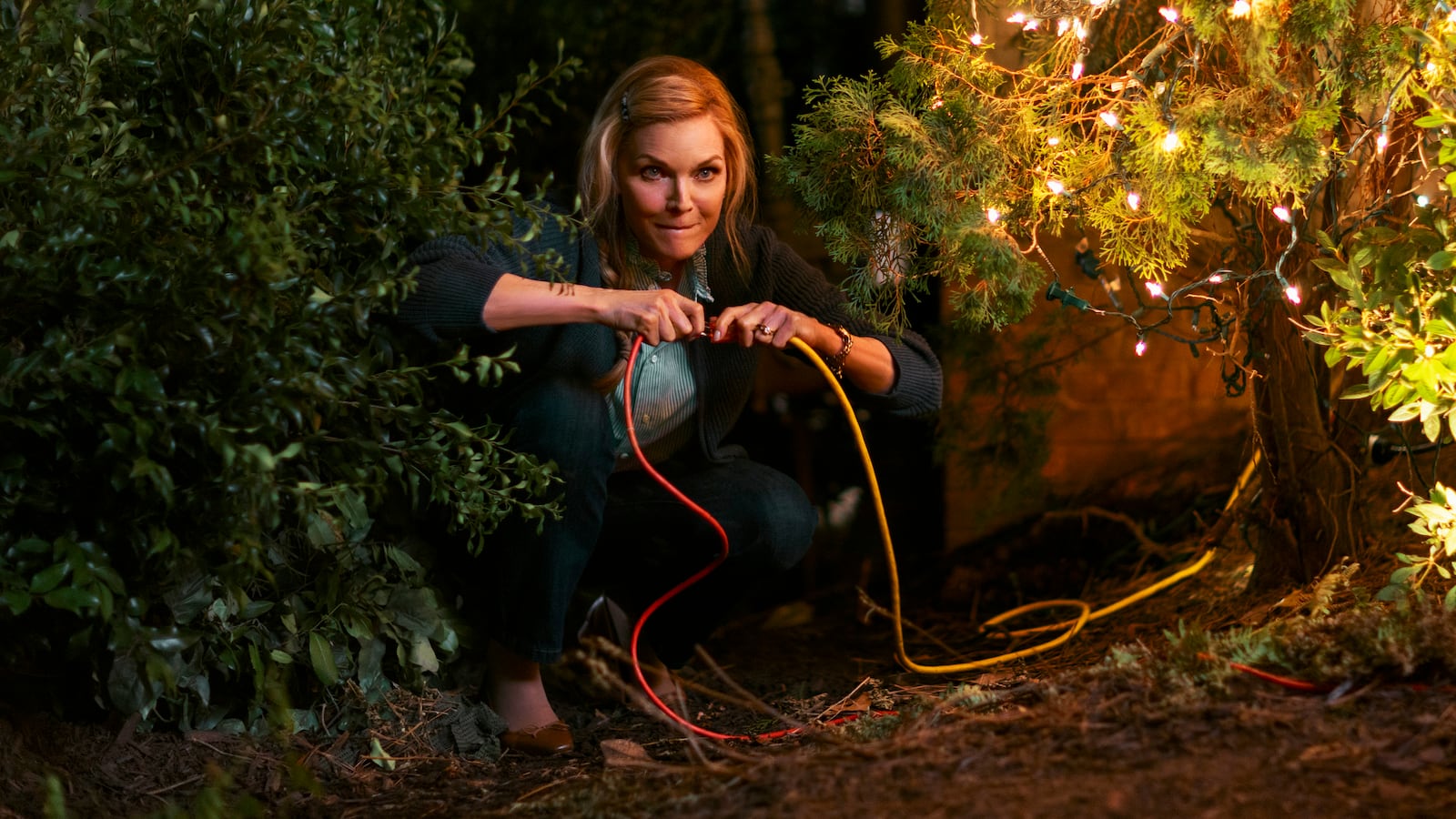
Written by Showalter and Chandler Baker, the film follows Claire Clauster, played by Michelle Pfeiffer (“Batman Returns,” “The Fabulous Baker Boys”), a Texas housewife planning her yearly elaborate Christmas celebration with her husband Nick, played by Dennis Leary (“Rescue Me,” “Demolition Man”), and kids: her eldest Channing, played by Felicity Jones (“Rogue One: A Star Wars Story,” “The Theory of Everything”), and her husband Doug, played by Jason Schwartzman (“Rushmore,” “Scott Pilgrim vs. The World”), her middle daughter Taylor, played by Chloë Grace Moretz (“Kick-Ass,” “Hugo”), and her girlfriend Donna, played by Devery Jacobs (“Reservation Dogs,” “Echo”), and her youngest child Sammy, played by Dominic Sessa (“The Holdovers,” “Now You See Me: Now You Don’t”). After the stress of the holiday season gets to her and she is forgotten while the rest of the family travels to an activity she planned, she packs her bag and decides to drive cross country to California to crash the Holiday Mom contest run by daytime TV host Zazzy Tims, played by Eva Longoria (“Desperate Housewives,” “Dora and the Lost City of Gold”).

Dysfunctional families are a staple of holiday films from across the decades, and this is no different. The Clausters are quite a dysfunctional family, with arguments and emotions boiling over seemingly at a moment's notice. It’s hard to call these roles particularly complex, and they certainly aren’t demanding for a cast as experienced as this. Pfeiffer is coasting through her performance, and Leary lands squarely in “bumbling dad who falls to pieces without the wife” territory. Jones is the one doing the most engaging work, but that’s simply because her character is the one given the most complex arc in the film. Apart from that, everyone is just fine.

Showalter and Baker’s script cribs plenty of elements from other dysfunctional family comedies and holiday films, jamming them into a hodgepodge of material that manages to spike the holiday comedy just a bit. There’s plenty of shocking “I can’t believe they said that” humor as well as a lot of awkward cringe comedy. Schwartzman gets the brunt of it, playing the punching bag for the majority of the film, if not the entire time. When separated from the comedy though, the dramatic moments feel half-baked. It’s not that Claire’s frustrations aren’t justified, but rather that everyone in the family seems equally awful to each other. It definitely nails the “lying to save someone’s feelings” elements that are tackled in most holiday films, but that’s just it. These elements have been tackled in plenty of other holiday films over the years to greater effects.

What you’re left with then is a straight-to-streaming film that features plenty of amusing humor and decent performances alongside reheated holiday material. Any technical elements aren’t really worth mentioning, given the flatness of everything. While there are definitely films that manage to still look great despite their cheap streaming only status, this is not one of them. The sets certainly look nice and lived in, with a fun dichotomy between deeply decorated warm houses and the flat white style of Christmas decorations, it all gives off the air of simply being “good enough.”

“Oh. What. Fun.” is a fun enough Christmas romp, one that certainly pulls from its fair share of other holiday works. The cast is fun, and the humor is just spiked enough, but it's hard to call this a top-tier effort for anyone involved. Rather, this is a prime example of a film that’ll entertain the whole family without staking a claim in anyone’s memory alongside the true Christmas classics. 3/5