Friday, April 11, 2025

Drop - Review: A Deadly Date Night Gone Digital


There’s something to be said for a reliable formula, and arguably no one in Hollywood knows that better than Blumhouse, the premiere makers of modern, reliable, low-budget horror fare. Over the past few years, one of their most reliable hitmakers has been Christopher Landon (“Happy Death Day,” “Freaky”), a director/writer who’s made a name more recently thanks to his campier, more comedic horror fare. Now, his latest film leans more into suspense and less into humor than any of his previous works, the simply titled “Drop.”

The film follows recently widowed single mother and therapist Violet Gates, played by Meghann Fahy (“The Bold Type,” “The White Lotus”), going on her first date since her husband’s death. After matching with Henry, played by Brandon Sklenar (“1923,” “It Ends with Us”), and leaving her sister Jen, played by Violett Beane (“Truth or Dare,” “Death and Other Details”), to watch her young son, Violet and Henry meet for a dinner date at an exclusive fancy restaurant. Shortly after arriving though, she begins receiving airdrops from an unknown party asking her to do certain things, including killing Henry, or else they will kill her sister and son.

For a fairly simple concept, Landon goes fully in on crafting the thrills in as creative a way as he can without completely reinventing the wheel. Numerous moments make excellent use of faux lighting and camera angles, purposefully playing with how things must look to Violet as opposed to being strictly “realistic.” One moment of her looking at her home security cameras has them appearing on different tiles on the wall behind her, and the film will occasionally dim or shut off the lights around her to isolate her. That, coupled with some fun Hitchockian dutch angles courtesy of cinematographer Marc Spicer (“Lights Out (2016),” “Fast & Furious 7”), makes for a presentation that's far better than the B-movie tale it's telling.

Which isn’t to say that said B-movie tale isn’t still entertaining. While a larger part of that comes from the presentation, the script from Jillian Jacobs (“Fantasy Island,” “Truth or Dare”) and Chris Roach (“Fantasy Island,” “Truth or Dare”) does its basic job in setting things up and getting you invested in the thrills Violet is subjected to. There’s just enough mystery and intrigue to keep things puttering along, and the central performances from Fahy and Sklenar both make for a compelling duo. The rest of the cast all fill their spots admirably, with none really amounting to anything more than pawns put in specific places for this kind of a “who-is-doing-it” whodunit.

At a brisk 95 minutes with credits, “Drop” doesn’t overstay its welcome. The performances from Fahy and Sklenar keep things brisk, and the pacing never drags. While things get a bit over-the-top in the last ten or so minutes, what’s here works on a very basic level. It’s the sort of movie that just feels like something that used to come out all the time back in the early 2000s. For anyone who’s seen the early 2000s Wes Craven film “Red Eye,” there are a few similarities here, in both construction and concept. That’s not a bad thing though, as plenty of horror or thriller films often overstay their welcome. Here, Landon gets you in and out in a timely and fun manner.

“Drop” is a perfect example of a film telling a B-movie tale with the flourishes of something next level. Its two leads are great, and the central idea provides enough twists and turns to keep things entertaining the whole way through. If there was a less skilled person in the director’s chair, it's not hard to imagine it being far more forgettable. With Landon, it’s a great little deadly date-movie treat. 3.5/5

Friday, April 4, 2025

A Minecraft Movie - Review: The Biggest Block-Buster of the Year


A lack of limitations can be the bastion of the most talented filmmakers and also an anchor that drags them down in a sea of endless opportunities. After all, we got an Academy Award winning billion-dollar film out of “Barbie.” So, it stands to reason that Any filmmaker would leap at the opportunity to make a movie with material as limitless as a game known for having zero limits. The other edge of that double edged sword is also likely the reason that development on a “Minecraft” movie started over a decade ago and passed through numerous writers, directors, and producers before arriving with Director Jared Hess (“Napoleon Dynamite,” “Nacho Libre”) and writers Allison Schroeder (“Hidden Figures,” “Christopher Robin”), Chris Bowman (“Middle School: The Worst Years of My Life,” “Masterminds”), Hubbel Palmer (“Middle School: The Worst Years of My Life,” “Masterminds”), Neil Widener, Gavin James, and Chris Galletta (“The Kings of Summer”). After years of waiting, we finally have “A Minecraft Movie.” 

The film follows a quartet of misfits; Garrett "The Garbage Man" Garrison, a washed-up former video game champion played by Jason Momoa (“Aquaman,” “Fast X”), Henry and Natalia, two siblings moving to a new town after the death of their mother, played by Sebastian Hansen and Emma Myers (“Wednesday (2022),” “A Good Girl’s Guide to Murder”) respectively, and Dawn, a real-estate agent/traveling zookeeper played by Danielle Brooks (“Orange is the New Black,” “Peacemaker”). After Henry discovers the Orb of Dominance, the four are teleported to the Overworld, a vast world made entirely of cubic landscapes and wildlife. The evil Malgosha, voiced by Rachel House (“Moana,” “Soul”), seeks the Orb of Dominance so she can rule the Overworld, and the group are helped by legendary crafter Steve, played by Jack Black (“School of Rock,” “Kung Fu Panda”), to return home and keep the orb from her. 

First and foremost, “A Minecraft Movie” is a class clown. This is a film that exists almost entirely to entertain and to make you laugh. If you’ve seen any of Hess’s previous films and their sense of humor just didn’t gel with you, “Minecraft” is no different. While things are paired down a bit, there’s still a good amount of tater tots, weird animals, loud screams, and random short songs. It can make for a charming experience as it all just washes over you, and certainly doesn’t feel like the hyper-processed, focus-tested-to-death blockbusters we can get out of big studios nowadays. This is a film that certainly has its own identity, for better or worse. 

Black and Momoa are the stars here and completely run away with Hess’s comedic sensibilities. Black is at his Jack-Black-iest, and cranks things up to eleven as the film progresses. Momoa likewise plays Garrett as an overgrown man-child and the two of them frequently feel like they’re simply there as vehicles for jokes. Hansen and Myers get the closest thing to an emotional arc that the film wants to build, and it's fine enough. Their sibling bond is typical family film fare, and they execute it well. Hansen actually impresses most from the entire cast, simply due to how new he is at leading this kind of a movie and fitting snuggly into the everyman (or everykid) role he’s presented with. Brooks, like Black and Momoa, is simply a vessel for jokes, but the film sidelines her and Myers for a significant chunk, further preventing them from leaving any kind of impression. House gives an inspired vocal performance as Malgosha, and the supporting voice/live action cast rounds consists of a lot of character actors who’re here for a few minutes of fun before disappearing. There’s barely any character development for anyone here, and while it can easily be argued that it’s completely unnecessary for a film like this, it does mean that none of the characters have any sort of staying power of memorability. You’re likely to remember plenty of the jokes and not the characters or circumstances that set them up. 

Despite plenty of criticisms of early trailers and promotional material, the film’s visuals and production design are exceptionally impressive. It pops with color and light, with the physical props and sets making an excellent impression. Apart from a handful of bad green screen moments, it's a visually sumptuous film, without breaking out of its blocky constraints. It’s the kind of film that feels like you can just reach out and touch it and surprisingly doesn’t find itself bogged down in an overuse of digital backgrounds and sets. It really is impressive how many of these locations were physically built and how excellent they look. Given how iconic the game’s music is, the score from Mark Mothersbaugh (“The LEGO Movie,” “The Rugrats Movie”) does a great job of blending the game’s themes with a grander, more “blockbuster” movie score. It certainly won’t replace the game’s music but it's a worthy interpretation, nevertheless. 

So, it's a big studio comedy with a weird sense of humor and a grand sense of visual panache. Where’s the rub? Well, it all comes back to the script and overall story from its six credited writers. In attempting to craft an original story to fit into the blocky constraints of the “Minecraft” world, they’ve instead crafted a tale that is anything but original. It’s a hodgepodge of everything from “Lord of the Rings” to “The LEGO Movie” to “The Super Mario Bros. Movie” to even “Napoleon Dynamite.” It’s the sort of film that celebrates creativity in its individual moments and overall message, but it’s constructed of the most conventional pieces and parts one could imagine. This then leads to the sense of humor being used as a crutch rather than as a supplement, which means that even those who are fans of Hess’s sense of wackiness and how much Black and Momoa are embracing the weird will just be numb by the end of things. If everything is weird and wacky, then eventually that becomes the norm, and nothing feels weird and wacky anymore. 

“A Minecraft Movie” is a class clown of a film from start to finish. The biggest caveat is that it starts as a class clown in middle school, and ends as a class clown in college, without anything ever changing. Black and Momoa lead a pretty game cast and it's certainly a gorgeous movie in its own way. This is the sort of film that is easily embraceable if you just hop on its wavelength and sense of humor and go along for the ride. But it's hard to imagine anyone not being exhausted by the time that ride ends, especially when the stuff that’s supposed to supplement it is so woefully underwhelming. 2.5/5 

A Nice Indian Boy - Review: The Bigness of Love


In the long tradition of rom-coms, the butting of the familial heads is one of the most classic fuels for tension and comedic strife. Doubly so when culture clashes are added to the fair. This is all to say that Roshan Sethi’s (“The Resident,” “World's Best”) latest film “A Good Indian Boy” has everything stacked in its favor, even down to a title that becomes a joke in itself as the film progresses. Luckily, this is one of the few modern rom-coms that not only doesn’t waste its premise, it manages to be the shining example of the best the genre has to offer.

Naveen, played by Karan Soni (“Deadpool 2,” “Spider-Man: Across the Spider-Verse"), is a doctor, a good son, and accepted as an openly gay man by the rest of his traditional Indian family. However, shortly after his sister Arundhati’s, played by Sunita Mani (“G.L.O.W.,” “Scavengers Reign”), wedding, he meets his own nice Indian boy. The catch is that while Jay Kurundkar, played by Jonathan Groff (“Mindhunter,” “Frozen”), is a nice, devout Indian man, he’s also adopted and white. But the pair are quickly smitten, leading to Naveen trying to figure out how to introduce him to his parents Megha and Archit, played by Zarna Garg and Harish Patel (“Eternals,” “Four Weddings and a Funeral (2019)”), respectively.

Soni and Groff have perfect chemistry. The amount of laughs and charm that screenwriter Eric Randall (“Elsbeth,” “In the Dark”) is able to mine from the pair of them is seemingly endless. They manage to effectively bring you into their relationship and make everything feel genuine without sacrificing the humor of it all. Soni in particular gets to really showcase his talents, taking the center stage spotlight that works his awkward charms to maximum effectiveness. Groff’s decades of stage experience are put to great work here, letting him play the more outlandish of the pair, yet still having one foot grounded in the realism of his own arc. It’s silly without becoming parodic. Garg and Patel make for the perfect parents, bickering and complimenting each others banter throughout, but the surprise standout is Mani. She lights up the screen on any appearance, and her scenes with Soni have a very authentic sibling nature that makes them a joy to watch together.

The atmosphere of the film is that of a classic romance film, with plenty of conversations down city streets and awkward dinnertime conversations, but cinematographer Amy Vincent (“Hustle & Flow,” “Sinister 2”) keeps things looking beautiful. It all honestly looks far better than one would expect given its small budget, with gorgeous colors and wedding shots throughout its runtime. The musical score by Raashi Kulkarni (“World’s Best,” “Wedding Season”) blends the melodic strings typical of the genre with more traditional Indian instrumentations to create a lovely and lush backdrop to the film’s better than expected visual stylings. Randall’s script works best as a meshing of two different ideals for the genre: on the one hand, when he’s playing directly into what’s expected of the rom-com subgenre, it's a sweet and sugary delight. When he’s playing into the awkward “fish out of water” elements present from Jay and his interactions with Naveen’s family, it's a really funny delight as well, just a more cringy one.

Like the two families, the meshing of the elements is where the film shines the brightest and creates some of its best moments: the actors get to shine, the script gets to shine, and the entire project is at its strongest points. “A Nice Indian Boy” is short, remarkably sweet, and a near perfect example of what the genre has to offer. With a pair of charming leads, a smooth and great look, and an exceptionally funny and big-hearted script, it's a wonderful little film that virtually anyone can watch and be thoroughly entertained by. 5/5

Friday, March 21, 2025

Disney's Snow White (2025) - Review: Not the Fairest (Nor the Worst) of Them All


This is the one everyone has been waiting for. The one we’ve been expecting since this trend of Disney churning out its classic animated films in live action began. The fairest of them all, one might even say. Yes, the much maligned, long in development, $270 million reimagining of the Walt Disney company’s very first feature length animated film, and the first feature length animated film period, has arrived. And as the title of the film clearly states, this is “Disney’s Snow White.” 

Set in a long past fantasy kingdom, the film follows the princess Snow White, played by Rachel Zegler (“West Side Story (2021),” “The Hunger Games: The Ballad of Songbirds & Snakes”), who finds herself and the kingdom under the rule of her stepmother, the Evil Queen, played by Gal Gadot (“Wonder Woman,” “Death on the Nile”). The Queen decides to have Snow White killed so she can pose no threat to her. Snow flees into the forest surrounding the kingdom, where she meets seven mining dwarves (Doc, Grumpy, Happy, Sneezy, Sleepy, Bashful, and Dopey) living in the forest and a band of rebels led by Jonathan, played by Andrew Burnap (“WeCrashed,” “The Front Room”). Together with the dwarves and the rebels, she embarks on a plan to liberate the kingdom from the Queen’s evil clutches. 

There are plenty of good ideas here and things that work quite well with a reimagining of material this old (the original film is fast approaching its 90th anniversary). Director Mark Webb (“(500) Days of Summer,” “The Amazing Spider-Man") and screenwriter Erin Cressida Wilson (“Secretary,” “The Girl on the Train”) establish a more caring and people-centric life for Snow, which makes her desire to help free the kingdom really work. It makes sense, and it works as a worthwhile addition to the material without feeling bloated. It’s one of the shorter of these Disney live-action remakes, and while this added material isn’t essential in its importance or how it’s told, it certainly isn’t monotonous either. 

Zegler is the heart and soul of the film. One would hope that would be obvious, given the fact that she is in the titular role, but she really excells in the material. While the overall script isn’t perfect, she manages to push through some of the worst lines to rise above when the material fails her. She’s entirely genuine and charming and whenever she’s on screen, the film actively becomes better. The same goes for the vocal performances for the dwarves. Lead by a really charmingly goofy performance from Jeremy Swift (“Ted Lasso,” “Downton Abbey”) as Doc, this septet of miners keeps exactly the same kind of oddball energy you’d expect from their borderline comedic-relief roles. With Martin Klebba (“Pirates of the Caribbean: The Curse of the Black Pearl,” “Pacific Rim: The Black”) as Grumpy, George Salazar in his film debut as Happy, Jason Kravits (“The Practice,” “Our Cartoon President”) as Sneezy, Andy Grotelueschen as Sleepy, Tituss Burgess (“Unbreakable Kimmy Schmidt,” “Schmigadoon!”) as Bashful, and Andrew Barth Feldman (“No Hard Feelings,” “Saturday Night”) as Dopey, the group all sound great singing and otherwise. 

Burnap is less memorable than Zegler or the dwarves, sliding into an archetype that seems more like a live action version of Eugene from “Tangled” got mixed into the fray, but he’s still a good presence, as is Ansu Kabia (“Miss Scarlet and The Duke,” “The End We Start From”) as the Evil Queen’s Huntsman, although he seems to be forgotten by the film by the end. Gal Gadot is the big sore thumb sticking out of the cast. She’s just plain bad. Numerous scenes involving her are punctuated with bizarre facial expressions and vocal deliveries. Her song is the worst in the film, both from a writing and performance standpoint. She’s just not compelling or delivering an interesting performance, or even a mediocre one. Her delivery is stilted and wonky, as if you fed her voice into an AI and had it dub over the lines for her. She’s, without a doubt, the worst part of the film. 

Visually the film is a very mixed bag. Cinematographer Mandy Walker (“Elvis (2022),” “Hidden Figures”) keeps things clear and moving, sometimes paying homage to shots from the original film while also working well within the visual effects heavy world. Where the mixed bag comes into play is in the film’s effects and production design. Anything in the kingdom has exceptional production design and effects work, it's simply gorgeous to look at. Outside of the kingdom, in the forest with Snow and the dwarves though, things are far more garish and ugly. The dwarves themselves aren’t terrible, but they also stand out even amongst the rest of the CGI due to their uncanny nature. The forest also has a bizarre dayglow lighting effect on everything. In the dwarves' house, for example, it's constantly lit as if the sunrise is shining in through every window, from every angle. It just looks very odd, almost like a lighting tech demo. 

While still containing a few iconic songs, the original “Snow White” has a less remembered soundtrack overall compared to previous Disney films. Songwriting duo Benj Pasek and Justin Paul (“La La Land,” “The Greatest Showman”) have updated some of the classic songs really well, with “Whistle While You Work” and “Heigh-Ho” getting fantastic updates. Zegler’s solo song “Waiting on a Wish” is also excellent, and the rest of the songs are good, if not as good as those three. Almost ironically consistent though, the only bad song in the film is Gadot’s solo villain song “All is Fair.” Her singing isn’t just subpar, the song itself just feels out of place and like a blended concoction of every other Disney villain song. The choreography, planned by Mandy Moore (“La La Land,” “Babylon”), is great across the board though, and it makes you wish Webb and Moore will team up in the future for an original, better musical. 

“Disney’s Snow White” is certainly not the train wreck some were predicting, nor is it the second coming of these live action remakes. It isn’t even the worst of said remakes either. Rather, it's a film with plenty of issues and plenty of good things as well. Zegler completely captivates and is the reason to watch the film itself, and the new and updated songs are delights. Apart from that, the rest of the film manages to be a fun distraction but never rises to replace the original in any way. It’s hard to tell if that was ever the point, but it does mean that in the years to come, after all the “controversies” die down, you’ll be hard pressed to find anyone to watch this over the original in most contexts. 3/5 

Friday, March 14, 2025

Novocaine - Review: A Painless Dark Comedy-Action-Romance Romp


Sometimes, all you need is a big, bright smile from a charming person to carry a concept through to its best result. Jack Quaid (“The Boys,” “My Adventures with Superman”) is one of those people who has the charm and the smile in spades, to the point where it almost becomes unfair. After years of leading ensembles or playing second fiddle, this eager fresh face finally has a film where he is unequivocally the lead, and he makes the absolute most of it. He also gets beat to hell and back, but if you’ve seen previous works involving him, this is more of a regularity than you’d expect. 

“Novocaine” stars Quaid as Nathan Caine, a mild-mannered middle manager at a bank with the inability to feel pain. He isn’t invincible or bestowed with superpowers, he just has a genetic disorder that means that he cannot feel pain, though he can still bleed and get plenty hurt. After an impromptu date night with bank teller Sherry, played by Amber Midthunder (“Prey,” “Legion”), his bank is robbed, and she is taken as a hostage. Worried that the police will not arrive in time to help, Nathan takes matters into his own hands and, with the help of his online gaming friend Roscoe, played by Jacob Batalon (“Spider-Man: Homecoming,” “Reginald the Vampire”), he sets out after the bank robbers who’re led by the almost charmingly evil Ray Nicholson (“Smile 2,” “Panic”). Meanwhile, Mincy and Coltraine, two detectives played by Betty Gabriel (“The Spine of Night,” “Get Out”) and Matt Walsh (“Veep,” “The Do-Over") respectively, follow Nathan’s trail, trying to piece together whether or not he was in on the robbery. 

This is the sort of film that entirely comes down to Quaid and his willingness to throw himself into a role where the basic premise requires him to get beat to hell and back. He is the absolute best part of the film, giving a performance so charming and winning that it could be argued that it is his true uncanny ability in the film. Somehow, he keeps the film’s energy high no matter the moment, and he keeps the film believable and grounded. Despite the hits Nathan takes, you never stop believing that he is willing to keep getting knocked down and popping right back up. 

Meanwhile, Midthunder makes for a compelling love interest Quaid, even if she doesn’t quite rise to his levels of weaponized charm. Batalon is a fun bit of confident comedic relief opposite Quaid more awkward everyman stylings, and Nicholson is truly a harrowing villain without teetering into being completely despicable. Gabriel and Walsh are both fine, and their b-plot does have an element of emotional truth and freshness to it by the end, but for the most part it’s a bog-standard police plot you see in a typical film of this ilk. 

The action is quick and high energy, without feeling like yet another “John Wick” style hyper-kinetic action fare. While not as precise as the action seen in those films, there’s a charming scrappy nature to the action here. Like Quaid’s own abilities, the fights feed back into the idea that Nathan is just an average dude put into a decidedly less average situation. Directing duo Dan Berk and Robert Olsen (“Villains,” “Significant Other”) makes sure that the tale is small scale from start to finish. It helps that writer Lars Jacobson (“Day of the Dead: Bloodline”) has crafted a story that never gets overblown; Nathan isn’t a secret former military/hitman badass, nor is there a criminal underworld involved. In a world where it seems like each action film feels the need to craft those kinds of plots, it's completely refreshing to see something that looks small scale that actually is. It allows the film to stretch its legs and become the sort of film that, while not breaking out of its genre, becomes a fantastic example of what this kind of film can be when its firing on all cylinders. 

“Novocaine” is a silly title for a film that revels in being a fantastic example of this kind of action film. It keeps the stakes small, fitting perfectly alongside a game cast led by Jack Quaid’s truly winning lead performance. The action is tense and grounded, but the film never loses a bit of its gory dark humor. Quaid’s everyman charms make it all flourish, even building a legitimately engaging romance by the end. It's hard to imagine anyone indulging in some “Novocaine” without a big grin on their face. 4.5/5 

The Electric State - Review: A Shambling Hunk of Expensive Cold Metal


In their post Marvel careers, the brothers Anthony and Joe Russo (“Avengers: Endgame,” “Captain America: The Winter Soldier”) have had an uneven career to say the least. While their producing work has been largely stellar, bringing their names to projects like the “Extraction” series, “The Legend of Ochi,” and “Everything Everywhere All at Once,” their directorial efforts have been less than stellar. After the crime-drama misfire of “Cherry” and the film named after its own color palette “The Grey Man,” the brothers have returned to more family friendly science-fiction adventure fare with “The Electric State.” 

Based on the illustrated novel by Simon StÃ¥lenhag, the film takes place in an alternate version of the 1990s after a war between humanity and the robotic animatronic machines built to serve them, led by an animatronic version of Mr. Peanut, voiced by Woody Harrelson (“The Hunger Games,” “True Detective”). After the robot's defeat by human manned drones created by tech mogul Ethan Skate, played by Stanley Tucci (“The Devil Wears Prada,” “Conclave”), they were banished to the exclusion zone, a chunk of the Midwest desert, and humanity began to use the drone technology to live their lives almost entirely in a virtual reality, piloting robotic drones to do their menial tasks. Years after the war, young orphan Michelle Greene, played by Millie Bobby Brown (“Enola Holmes,” “Stranger Things”), is visited by a small robot who claims to be her deceased brother. She then teams up with scavenging drifter Keats, played by Chris Pratt (“Parks & Recreation,” “Guardians of the Galaxy”), and his robotic friend Herman, voiced by Anthony Mackie (“Captain America: Brave New World,” “Twisted Metal”), to venture through the exclusion zone to find scientist Clark Amherst, played by Ke Huy Quan (“Everything Everywhere All at Once,” “Loki”), to locate her brother. 

Admittedly, it sounds like there’s far more going on than there is, and while the film does tackle a lot of ground, it does so in a fairly neat package. At just a little over two hours, things move along at a brisk pace, proving to be a nice showcase for the elaborate and cluttered sets and robot designs. The visual effects are good, without becoming exceptional, riding a line between style and realism. Cinematographer Stephen F. Windon (“Fast Five,” “Sonic the Hedgehog (2020)”) has plenty of experience shooting visual effects heavy films, and he keeps the action clear and easily identifiable. It’s not a colorful or “pretty” film, but it certainly isn’t devoid of life or color and there’s an active effort to make things look nicer. 

Unfortunately, that’s where the net positives end. What this film is at its core is a complete rehash of virtually every science-fiction family adventure film to come out post “Star Wars.” Pratt’s character dresses and acts like Han Solo, complete with a non-human sidekick. Much of the musical score from Alan Silvestri (“Back to the Future,” “Who Framed Roger Rabbit”) doesn’t just sound ripped from films like “Super 8” or “E.T.”, it sounds like those films were accidentally left on while the musical score was being recorded. Each story beat and moment feels torn from other better films in this genre: “The Iron Giant,” “E.T.” “Super 8,” “Close Encounters of the Third Kind,” “A.I. Artificial Intelligence,” “Jurassic Park,” hell even “Ready Player One” feel like they’ve been stripped for parts by the film’s zombie-like robot scavengers and reassembled into the derivative hodgepodge that is this film. 

Pratt and Brown are turning in what could charitably be called passible work here, and neither are any semblance of interesting. Pratt is practically sleepwalking through this kind of grimy loner role that he established he could pull off well in “Guardians,” only this time he’s accompanied by a horrendous mustache and cheap costume. Brown is delivering the same kind of precocious mediocre child-actor performance that reminds one of the likes of Spencer Breslin, with some lines even delivered as if she’s reading them for the first time. Tucci isn’t much better, working with the same copy-cat “evil CEO” material that’s been a subject of these kinds of films since the early 2000s. Giancarlo Esposito (“Breaking Bad,” “Do the Right Thing”) is here as a robot bounty hunter Marshall Bradbury, but by the time it ends you’ll be hard pressed to remember he was there. The same goes for Jenny Slate (“Gifted,” “Marcel the Shell with Shoes On”) and Brian Cox (“Deadwood,” “Succession”) who have borderline vocal cameos as Penny Pal, a mail robot, and Popfly, a baseball robot respectively. 

The script, from screenwriting duo Christopher Markus and Stephen McFeely (“The Chronicles of Narnia: The Lion, the Witch and the Wardrobe,” “Captain America: The Winter Soldier”), feels like a complete mashup of other, better films in this genre. It’s not that it attempts to harken back to those other films through moments of nostalgia, it's that they have moments and stretches of the plot simply lifted from those other films. When Michelle first meets the robot form of her brother, the scene feels like an almost shot for shot recreation of Elliot finding E.T. in his backyard. It could be seen as a fun throwback to more nostalgic family fare, but the film never does anything with these elements. It feels like a script made of puzzle pieces from better films simply because the writers couldn’t be bothered to come up with anything better. It would be disheartening, to see a concept wasted like this, even if it was an original film, but it's even more upsetting given the material this film was based on. 

StÃ¥lenhag’s original book is heavy on the visuals and atmosphere, and light on story. It's the sort of book where things are implied but never confirmed. Giant battle drones pepper the landscapes, although no specific war or battle is ever mentioned. It’s a bleak tale but almost disarmingly so, one that feels human and engaging, never cold, without losing that bleakness. Some of those visuals from the book are seen built out in hyper-realistic CGI sets here, but the larger plot is completely different. Rather, the Russos seem almost uncomfortable with this kind of material, choosing instead to adapt this tale of humanity and technology with all the subtlety and emotional intelligence of a 12-year-old middle school boy on the playground. Who needs a moment of compassion between robots and humanity to exist on its own when we can keep cutting back and forth between a giant destructive battle outside. 

As the film’s final emotional monologue is being given by Brown, there’s a piece of music playing beneath her speech. It isn’t a needle drop though, and as the notes well to an emotional climax, it becomes clear what the song is. In their big final emotional monologue of their film about humanity needing to reconnect after technology has split them apart, they’ve chosen to use an instrumental version of “Wonderwall.” That would already be a resoundingly obvious and mind-numbing choice, but then as the credits roll, the song “Yoshimi Battles the Pink Robots, Pt. 1” begins to play. This song, which contains the lyrics “Those evil-natured robots (I'll get you, Yoshimi)/They're programmed to destroy us,” feels remarkably out of place coming just after an ending which feels like a win and a humanizing victory for the downtrodden robot population. These decisions don’t come from directors who have made a film like this for emotional or creative reasons. These are decisions made by people who just want a cool song to end their cool movie, which is badass and cool, with nothing to back it up. All style, zero substance. Why is the leader of the robotic revolution Mr. Peanut, a character who wasn’t even in the original book? Well, because it's a fun childhood thing. And I’m sure Planters paid a decent bit as well. 

“The Electric State” feels like a robotic concoction. Like its CGI metal characters, it's a shambling mess that looks nice and has a handful of good performances but is merely stitched together from the parts of other, better films on almost every level. From the music to the characters to the story beats, it's as if it's trying to remind you of better films not in a nostalgic way, but because otherwise the film itself wouldn’t have anything to bring to the table. What’s here honestly isn’t the worst thing in the world; it’s routine and mediocre at best. But what it represents is a far worse thing. 1.5/5 

Black Bag - Review: I Spy a Sexy, Witty, Quick Good Time


There’s something particularly alluring about the life of a spy. The secrecy, the style, the globe-trotting, the murder. Virtually since the beginning of film, spies have been a reliable source of dramatic intrigue for filmmakers across the globe. It can be a calculating and cold job, but then so can the work of Steven Soderbergh (“Ocean’s Eleven (2001),” “Logan Lucky”). When he’s at his best, he’s lively and full of little quirks and touches within a seemingly calm exterior. So, if you mix his style, with that of the spy genre, and a script from someone like David Koepp (“Jurassic Park,” “Panic Room”), you get a nice neat little package. You get a “Black Bag.” 

George Woodhouse, played by Michael Fassbender (“X-Men: First Class,” “Steve Jobs”), is married to Kathryn St. Jean, played by Cate Blanchett (“The Lord of the Rings: Return of the King,” “Tár”), and the pair are so in love it borderline puzzles their friends and acquaintances. They’re also both spies within the same British intelligence spy agency. One evening, George is told that his next assignment is to find the internal source who stole and leaked a piece of software called Severus, and that one of the suspects is his wife. From there, he begins to suspect her and their marriage, roping in his friends and fellow spies Clarissa, played by Marisa Abela (“Industry,” “Back to Black”), Freddie, played by Tom Burke (“Mank,” “Furiosa: A Mad Max Saga”), Zoe, played by Naomie Harris (“Moonlight,” “No Time to Die”), and James, played by Regé-Jean Page (“Bridgerton,” “Dungeons & Dragons: Honor Among Thieves”), to help find the leak before he must answer to Arthur Stieglitz, played by Pierce Brosnan (“GoldenEye,” “Mamma Mia!”), their agency head. 

Soderbergh’s best sensibilities are on full display here, to the very best effects. Despite still going by pseudonyms, he continues to be his own editor and cinematographer, and it means that his pictures feel exceptionally purposeful, every decision deliberate. This matches extremely well with the spy thriller genre itself and works as a fantastic complement to the fluidity of Koepp’s script. The lines, jabs, quips, and quirks flow so naturally that it begins to feel voyeuristic, as if you yourself are a spy peeking in on the events as they unfold. The cinematography is particularly gorgeous; simplistic and deliberately done without being plain, creative without being showy. 

The entire cast is completely locked in, and while it could be easy to label this a film where you just watch attractive people talk and lie to each other, the nuances of each performance are clear and excellent. Fassbender and Blanchett are a steamy and complicated couple together, letting each scene feel as though it could play out in any number of ways. The ensemble cast all fit into their various roles and archetypes in the spy genre well, but playing within said roles enough to prevent any kind of stagnation. Abela is a particular standout, imbuing Clarissa with a smarmy kind of innocence without betraying her intelligence. As the youngest member of this work group, hers is the most interesting role to observe, as she slowly pieces together just what kind of a world she’s involved herself in. 

Soderbergh keeps things brisk and light, and his directorial touches are virtually tailor made for this genre. But so are his editing skills and ability to construct this film like an inside out puzzle box. Things that might initially come across as plot holes or oddities early on are slowly recontextualized as things progress. It shows a tight and masterful grip on the medium, yet another example of Soderbergh’s ability to shapeshift into whatever genre is handed to him. This brisk and playful pace is elevated further by David Holmes’s (“Ocean’s Eleven (2001),” “Logan Lucky”) electric and punctual score, popping up just when needed as if it’s the final cherry on top of a scene. 

At just over 90 minutes, “Black Bag” is just a good old fashioned adult drama. Its talented cast runs away with the material, and Soderbergh’s style keeps things fun without becoming farcical, or without betraying the thriller nature at the core of the tale. Koepp’s script maintains that same sensibility and results in one of his best writing efforts in years. For those bemoaning the lack of movies for grown-ups at a theatrical level, Soderbergh and Koepp have essentially left a nice and tidy little thriller to dive into and enjoy. 5/5 

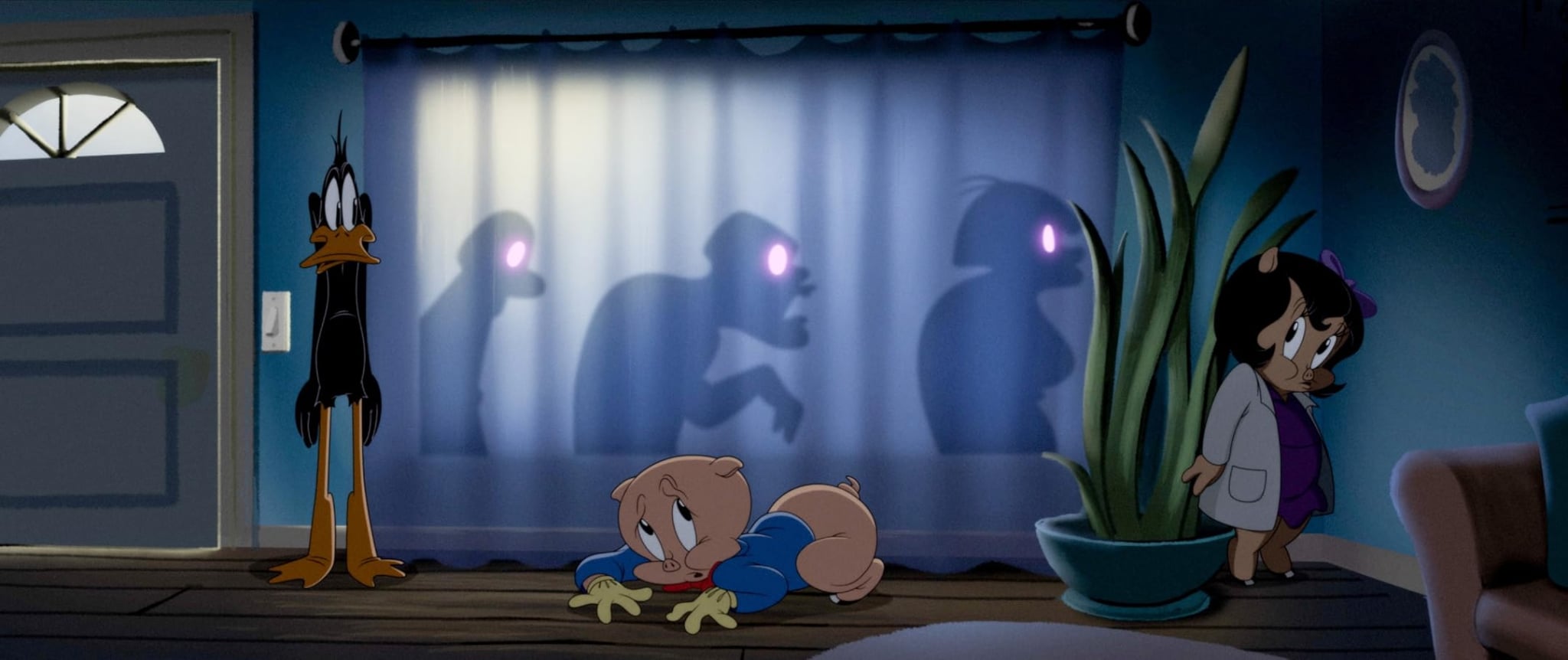
The Day the Earth Blew Up: A Looney Tunes Movie - Review: The Big Screen Has Never Been Loonier


It’s a bit astonishing that, as we approach their 100th anniversary, “The Day the Earth Blew Up” is the first theatrical Looney Tunes film to be released that isn’t a live action-animation hybrid or a compilation of previously released shorts spliced into a film. It seems like an immediate slam dunk, but for some reason, Warner Bros. didn't see it that way and almost dropped the film into a tax-write off oblivion. In stepped small-time distributor Ketchup Entertainment, who’s biggest hits so far have been the Michael Mann-directed “Ferrari” film and 2012’s President hunting B-movie “Big Game.” It’s thanks to them that “The Day the Earth Blew Up” has survived and graced theatres this year, and it might just be the biggest bit of goodwill the studio could have ever earned. 

The film follows Porky Pig and Daffy Duck, both voiced by longtime modern Tune staple Eric Bauza (“Tiny Toons Looniversity,” “Looney Tunes Cartoons”), living together in the big city. In search of money to repair their house, the pair find themselves working at the Goodie Gum factory alongside Petunia Pig, voiced by Candi Milo (“ChalkZone,” “Foster’s Home for Imaginary Friends”). While working there, they discover a sinister mind-control plot put forth by an alien Invader, voiced by Peter MacNicol (“Ally McBeal,” “Sophie’s Choice”), to take over the Earth using the factories chewing gum. 

As is the case since their inception, even more so than the animation, the voices for these Tunes are their heart and soul. Luckily, the voice actors currently behind these modern interpretations are as excellent as they’ve ever been. Bauza nails Porky and Daffy’s individual nuances and vocal ticks with flawless execution, and so many of the film’s moments become even more impressive when you realize that it’s essentially him talking to himself. Milo brings an energetic and science driven spin on Petunia that helps elevate her beyond just being the “female version of Porky.” MacNicol is a devilishly entertaining villainous force, perfectly sliding just enough menace into the voice of an archetypal B-movie alien invader. 

Besides the smaller distribution and cultural impact, if there’s one main reason to see this on the big screen, it’s the animation. Gorgeously done, every frame is hand drawn and is full of life. Not only that, but it gets experimental at numerous moments. Early on, an extended sequence shifts from widescreen to the 4:3 aspect ratio of the original theatrical shorts, one bit apes the art styles of 60s sepia-toned animation, and there are even extended moments with only music, composed to excellent effect by Joshua Moshier (“Baskets,” “Looney Tunes Cartoons”), aping the original Merrie Melodies aesthetic. It truly does feel like every single bit of this film’s visual identity is in service of creating a gorgeous, lushly animated feature that pays tribute to almost every part of the Tunes’s history. 

Directed by longtime TV director Pete Browngardt (“Uncle Grandpa,” “The Marvelous Misadventures of Flapjack”) and co-written by Browngardt and ten others (Darrick Bachman, Kevin Costello, Andrew Dickman, David Gemmill, Alex Kirwan, Ryan Kramer, Jason Reicher, Michael Ruocco, Johnny Ryan, and Eddie Trigueros), there’s a legitimate effort to somehow bring a typical three-act structure to a Looney Tunes adventure, without sacrificing a legitimate narrative payoff or general looniness. While nothing exceptional, the film does manage to get a legitimately engaging emotional arc out of Porky and Daffy’s misadventure. Given their long and illustrious history, it means that these writers have a strict set of personalities to work with. That means most of the work is already done, and they can immediately jump into the world’s humor and in mixing up that central relationship. It’s virtually a laugh a minute film, and even if those laughs slow in the film’s third act, you’re never at a loss for amusing sights or bits of visual wonderment. The humor might not be strictly for everyone but taking a quick glance at an episode or two of Browngardt’s own “Looney Tunes Cartoons” show will be a good indicator of your enjoyment. 

It’s almost a miracle that “The Day the Earth Blew Up” exists at all in the modern theatrical landscape, and the fact that Ketchup Entertainment seems to view its meager box-office as a success already is a good thing. It’s a thoroughly enjoyable comedic tour-de-force, blending various forms of animation and music to hilarious effect. More than that, and more than most other films recently, it feels like a genuine work of love and care from those behind the scenes. It isn’t just a good Looney Tunes work; it's one of the finest examples of the animated medium in a very long time. Everything from the voice work, the animation, the music, the gags, it’s all an example of the animation medium in peak form. 5/5

Friday, March 7, 2025

Mickey 17 - Review: Two Social Pariahs Are Better Than One


There’s nothing more exciting in the realm of filmmaking than a blank check movie. Either after a massive box office success or a string of award wins, a director can find themselves being approached by a studio to essentially do whatever they want. Recent examples include Damien Chazelle’s post-“La La Land” film “Babylon,” Spielberg’s post-“Jaws” film “Close Encounters of the Third Kind,” James Cameron's post-“Aliens” film “The Abyss”, Brad Bird’s post-“Mission Impossible: Ghost Protocol” film “Tomorrowland,” Christopher Nolan’s upcoming post-“Oppenheimer” film “The Odyssey”, and inevitably whatever the Daniels and Greta Gerwig want to do next. Bong Joon-Ho (“Parasite,” Snowpiercer”) is absolutely in that camp as well fresh off the box-office success of Best Picture winner “Parasite.” And he’s cashing that cheque with an adaptation of the novel “Mickey 7” as “Mickey 17,” a gonzo, goofy, black science-fiction comedy that sees multiple Robert Pattinson(s) (“Twilight,” “The Batman”) taking on space fascists, animal cruelty, and an uprising of the lower working class. 

The film follows Mickey Barnes, played by Pattinson, who decides to vacate Earth and begin working in space as an “expendable,” a person who agrees partake in deadly jobs or scientific experiments and cloned upon their death with memories and personality intact, ready to do it all again. After landing on the snowy planet Niflheim during a space colonization trip lead by failed politician Kenneth Marshall, played by Mark Ruffalo (“13 Going on 30,” “The Avengers”), and his wife Ylfa, played by Toni Collette (“Hereditary,” “Knives Out”), Mickey finds himself narrowly escaping death at the hands of the indigenous species called “Creepers.” However, everyone else aboard the ship, including his space-cop girlfriend Nasha, played by Naomi Ackie (“Blink Twice,” “I Want to Dance with Somebody”) and pilot best friend Tomi, played by Steven Yeun (“Nope,” “The Walking Dead”), believes he perished on the planet and have already reprinted him. Now Mickey 17 is forced to confront his new self, Mickey 18, as well as the constraints of his employment, the fate of the planet, and the consequence for “multiples” like him: permanent death. 

Few directors would welcome this kind of layered and dense material, but Joon-Ho jumps in headfirst and runs away with it. Social satire is arguably the only through-line with his entire career and his assuredness is on full display. Regardless of how things unfold, this is clearly a film helmed by a confident man, and his use of the film’s most satirical elements is an exemplary display of that. There are some messier spots to be certain; the film’s third act stretches on for longer than one would think and there’s an inconsistent use of narration, but Joon-Ho is clearly making some big swings that hit far more often than they miss. 

Pattinson is completely on the same wavelength as Joon-Ho, both working on an equal level of science-fiction weirdness and goofiness. His dual performances are exceptionally strong, riding the line between showcasing how different these two Mickeys are without losing the heart of the character. He brings a sense of easily identifiable emotional pathos to the role(s), and in some ways provides a cathartic “what if” situation for anyone who’s ever felt like they’ve been chewed up and spat out by their job. A while back, famed director Park Chan-Wook proclaimed that Pattinson should be nominated for Best Actor and Supporting Actor for his work in the film and seeing the range of his performance(s), it's not hard to see why. 

The rest of Joon-Ho's ensemble is just as delightful, with everyone zeroing in on the absurdist sci-fi whimsy at the core of the tale. Ackie is a hyperactive, aggressive, romantic delight opposite Pattinson, and the film does an excellent job at giving the pair a showcase for Mickey and Nasha’s budding and steamy romance. Ruffalo and Collette are definitely pulling from specific influences in their portrayal of the film’s antagonists. They play up the hamminess of their performances, with Collette slacking slightly as her role feels more one note. Ruffalo though, as he practically breathes his words through his glimmering veneers, delivers an instantly hate-able if exceptionally cheesy villain. Yeun also manages to be a chaotic force across the film, with a big grin and slightly antagonistic sensibilities. But Bong feels less interested in him, resulting in his character getting sidelined for a chunk of the film. 

Besides the main cast, Joon-Ho clearly has a gift with his smaller ensemble roles as well. He seems to bring out the best in a cast, doubly so for bit parts that might only have a handful of lines otherwise. Patsy Ferran (“White Bird,” “Miss Austen”) pops up throughout as a wide-eyed scientist who shares Mickey’s fascination with the “creepers” species, Cameron Britton (“Mindhunter,” “Manhunt: Deadly Games”) is Arkady, a somewhat dimwitted leader of the scientists’ brigade, Stephen Park (“The French Dispatch, “Snowpiercer”) shows up seemingly randomly as Agent Zeke, the head of Nasha’s security force, and Anamaria Vartolomei (“Happening,” “The Count of Monte Cristo (2024)”) is Kai, a fellow scientist working with Mickey who begins to fall for Mickey. Each of them manages to make an impact in much the same way the most iconic character actors do, thrusted forth by Joon-Ho's strong directorial force. 

Where things get a bit stickier comes with Bong’s script and overall plotting. There’s a grand scope here and what Joon-Ho does manage to accomplish is pretty fantastic, but by the time the film wraps up, it's a case of him getting a few too many toys to play with and not enough time for each of them to get their deserved time. The result is a film that tackles a lot of different elements that all come back to one central theme: oppression and destruction, but in each individual element it isn’t fleshed out as much as one would hope from someone like Bong. The humor is the film’s biggest and best aspect, shattering through everything. It’s the central lynchpin, and Bong makes sure that his satire and its deployed use is as subtle as a sledgehammer. 

From a technical aspect as well, the film is a masterclass. “Mickey 17” comes in with the biggest budget of Joon-Ho's career, more than double his previously biggest, and he doesn’t let it go to waste. The usage of practical and claustrophobic sets, as well as the heavy contrasting colors, showcases a tight production design that’s sumptuous and enviable for any other filmmaker. It invokes a mixture between a prison facility and the retrofuture “cassette tech” of films like “Alien.” This gorgeous aesthetic and textual experience is further enhanced by Darius Khondji’s (“Se7en,” “Uncut Gems”) cinematography, but the technical aspect that stands out the most is the musical score from composer Jung Jae-il (“Parasite,” “Squid Game”). A musical composition that fluctuates between calming beats and tense piano strings that helps to accentuate every single moment. 

In the age of blockbuster dominance, a film like “Mickey 17” is a delight to experience, even when it doesn’t fully nail every aspect. A tonal ballet between bits of purely dark comedy, social revolution, and pining romance, built within a textually fantastic visual world, and with a commanding and capable cast, led by not one but two Robert Pattinsons, there are few films like “Mickey 17.” Bong Joon-Ho's latest is a confident and messy tales of social revolt in space that succeeds even as Bong seems to be overfilling his tale with goodies. If you can handle the radical and completely unsubtle social tones at play, you’re not likely to find a film as fun, as weird, as messy, and as enjoyable as this Mickey anytime soon. 4.5/5 

Plankton: The Movie - Review: A Single Cell's Celluloid Adventure


There certainly isn’t a lack of “SpongeBob” related media these days. From the abundance of merchandise based on the show, including a new line of merch themed around the various memes the series has spawned, various spin-off TV shows, and the numerous theatrical and Netflix produced films. Now there’s yet another film in that Netflix made series of spin-off projects. After last year’s abysmal Sandy Cheeks movie, now we’ve got one focusing on Bikini Bottom’s most villainous single-celled organism. 

The aptly titled “Plankton: The Movie” follows the titular villainous sea creature, voiced by Mr. Lawrence (“Rocko’s Modern Life,” “Mighty Magiswords”), who once again attempts to steal the Krabby Patty Secret Formula. However, after his latest failed attempt leads to a fight with his computerized wife Karen, voiced by Jill Talley (“The Boondocks,” “The Loud House”), she leaves him and begins to exact her own revenge on Bikini Bottom. Beaten and downtrodden, Plankton seeks the help of SpongeBob, voiced by Tom Kenny (“Adventure Time,” “Rocko’s Modern Life”), to help him rekindle his relationship with Karen and save Bikini Bottom. 

If nothing else, this 80-minute-long adventure is a perfect showcase for the voice acting talents of Lawrence and Talley. They’ve voiced these characters since their creation and giving them a meatier tale to work with is absolutely the best decision. The material isn’t something exceptional, but it provides them plenty of excuses to delivers amusing gags and work within the constraints of the characters’ limited growth. Talley in particular gets a bit more to chew as Karen eventually splits into three different version with three different emotions, allowing her to put different spins on the character’s normal voice. Kenny is just as reliable as he’s ever been as the boisterous Bob, and the rest of the series’ ensemble is here and as chuckle worthy as ever. 

The film’s script, co-written by Lawrence, Chris Viscardi (“Snow Day (2000),” “The Loud House Movie”), and Kaz (“Phineas and Ferb,” “Camp Lazlo”), and directed by Dave Needham (“The Loud House Movie”), delves a bit deeper into the backstories of Plankton and Karen, but feels paper-thin in the context of the rest of the series. Let’s face it: something like this is either only going to appeal to die-hard fans or young kids. And die-hard fans will immediately recognize how virtually everything explored with Karen and Plankton’s backstory contradicts previously established series lore. It isn’t a crazy thing, as the whole show has constantly rewritten itself, but it prevents it from feeling like an essential piece of the series' history. 

Just like the Sandy Cheeks film, there’s also a handful of original songs peppered throughout, making the film a lite musical. Written by Bret McKenzie (“The Muppets (2011),” “Thelma the Unicorn”), Linda Perry (“Out of My Mind (2024),” “Dumplin’ (2018)”), Mark Mothersbaugh (“Cloudy with a Chance of Meatballs,” “The LEGO Movie”), and Bob Mothersbaugh (“The Life Aquatic with Steve Zissou,” “Rugrats (2021)”), the songs work as fun showcases of the various musical styles the series has had over the years. They aren’t particularly standout works, but they certainly aren’t painful either. They also backup some differing animation stylings shown throughout the film. For certain sequences and flashbacks, things get as experimental as one might expect from a Netflix produced TV show spinoff film. Which is to say not much, but the handful of times it does are good enough that they make you wish the film did it more. 

For the rest of the visuals, the film’s CGI is a step-down from the theatrical films, but a slight improvement over that in last year’s Sandy Cheeks film and the Paramount+ show “Kamp Koral.” The 3D animation, as opposed to the main series traditional 2D style, still keeps the same over-the-top cartoony nature of the base animation. It never feels stilted or forced, but it lacks the extra touches implemented in the theatrical 3D “SpongeBob” films. Whereas the last theatrical film, “Sponge on the Run,” has small pores and exaggerated stylings in each detail, this one is clean and smooth but lacking any fine details or specific style. It’s fine enough, and again, it maintains the specific momentary exaggerations used for comedic moments, but it's a flat style overall. 

“Plankton: The Movie” is a great little diversion into the world of SpongeBob that is certainly amusing enough to distract for 80 minutes. It's at its best when it's a simple showcase of the voice acting talents of its two lead actors, letting them really play with characters they’ve worked with for twenty-five years. While the animation isn’t as detailed as it could be and the overall plot continues a bizarre trend of complete disregard for previous series lore, it importantly still gets the core of these characters right and works as a love letter to Mr. Lawrence, Jill Talley, and their work with the series for the past two decades. 3.5/5