Wednesday, November 26, 2025

Hamnet - Review: The Rest Is Silence


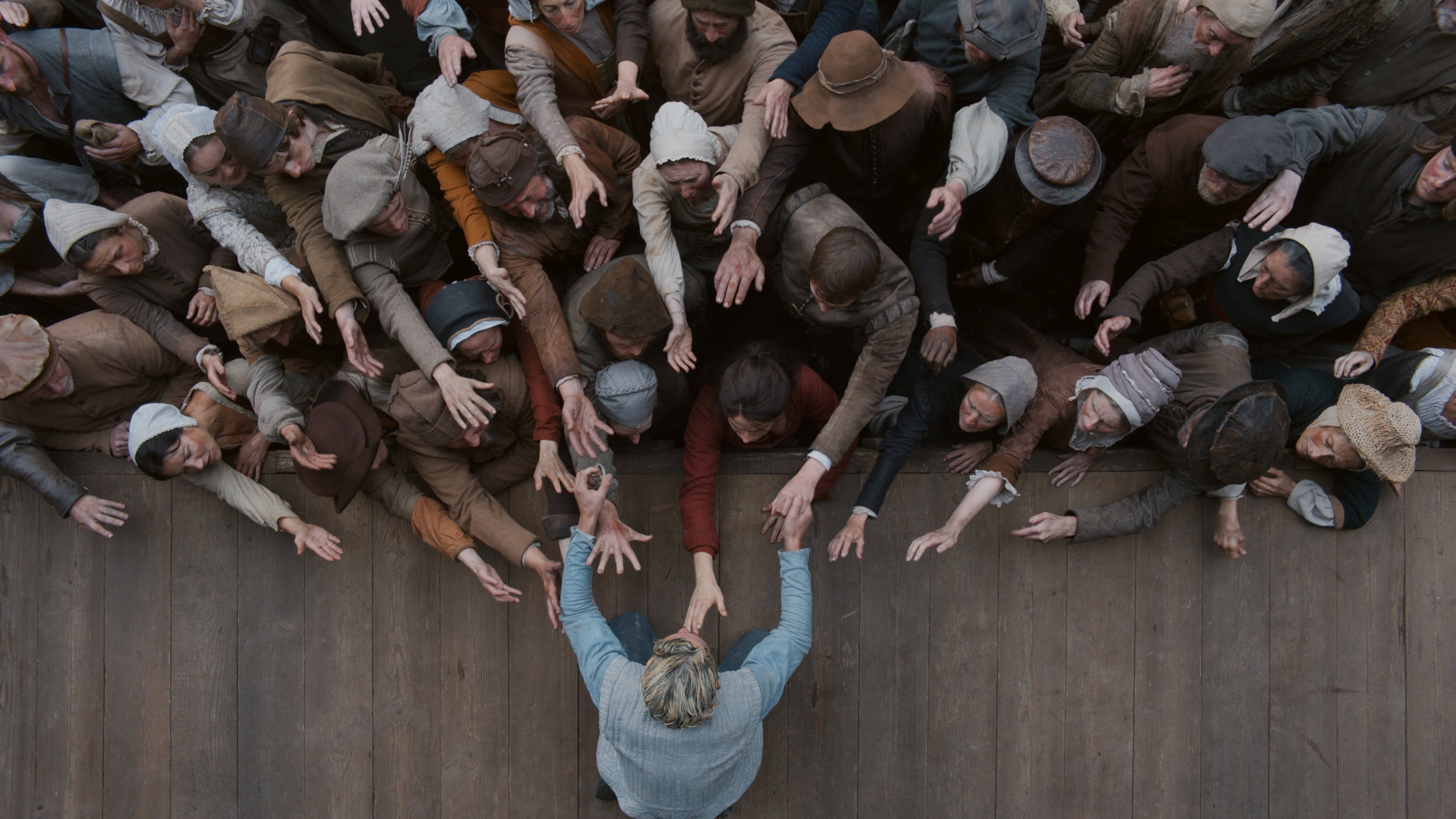
There’s a certain mythology surrounding works that have outlived their own creators, especially if they’ve outlived them for hundreds of years. For the works of Shakespeare, even that might be damning them with faint praise. His works have endured for centuries for numerous reasons, but beyond that, there is a fascination with trying to imagine the inspirations behind their creations. That’s what itself inspired the novel “Hamnet” by Maggie O'Farrell which then itself has been adapted by co-writer/director Chloé Zhao (“Nomadland,” “Eternals”) and O’Farrell herself into this work.

The film follows William Shakespeare, played by Paul Mescal (“Aftersun,” “All of Us Strangers), and his wife Agnes, played by Jessie Buckley (“The Lost Daughter,” “i’m thinking of ending things”), from their initial meeting and courtship through their marriage and the births of their three children: Susanna, played by Bodhi Rae Breathnach, Judith, played by Olivia Lynes, and the titular Hamnet, played by Jacobi Jupe (“Peter Pan & Wendy,” “Before (2024)”). With William in London working in the theatre, the plague reaches the family, eventually taking the life of a young Hamnet. The strain on Agnes and William’s relationship after his death then inspires William to write arguably his most famous work, “The Tragedy of Hamlet, Prince of Denmark.”

While O’Farrell’s original novel is a fictionalized interpretation of Shakespeare’s life (he did have a son named Hamnet who passed away before he made “Hamlet”), Zhao and O’Farrell ground it in a deep emotional truth that they spread throughout the film. Watching Agnes and William’s relationship ebb and flow throughout the film is a deeply affecting experience. These are two performances anchored by their actors’ skills and the depth of the material at work. Buckley gives a career best performance, wallowing in the sort of grief that only a mother can express, while also showcasing great and varied joy throughout her life. Mescal is slightly more one note, if only because he hides behind William’s tortured artist persona for some of the film. Regardless of that though, this is clearly Buckley’s film to lead and she does so exceptionally.

The surrounding supporting cast has plenty of great, if brief, highlights. Breathnach and Lynes have a wonderful sibling dynamic, with Lynes getting some particularly great moments with Jupe. But it is Jupe himself who delivers a truly fantastic performance, one of the best performances from a young actor this entire year. The way he’s able to perfectly encapsulate this kind of sibling bond and tragedy within his arc is nothing short of heartbreaking.

Zhao’s strengths lie in the quiet, reflective moments that rhyme with their futures, and “Hamnet” showcases plenty of moments like that. Whether an imposing pit of inky blackness or the slowly encroaching surrounding river, Zhao and O’Farrell’s story runs rampant with visual motifs and symbolism that’s wonderful to immerse deeply into. Large stretches of the film have little to no dialogue as well, allowing Zhao and cinematographer Łukasz Żal (“The Zone of Interest,” “i’m thinking of ending things”) to fully encapsulate the film’s mood with gorgeous forests and English landscapes. It also proves to be an excellent statement on the powerful catharsis of art in general, and the way it can touch us despite the depth of our grief. The moments when it depicts this are some of the most wonderful in the entire work, and it’ll be one of many times you’ll likely be reaching for the tissues.

For a film as calm and deliberately paced as this, the first act does present a minor hiccup on its journey to that patter. The first act feels remarkably slower than the rest of the already slow film, leading to it simply being the least interesting part of the film. It still maintains the same gorgeous visuals and performances, but the film simply takes time to ramp up to its most engaging aspects. Max Richter’s (“The Leftovers,” “Ad Astra”) score is also slightly underwhelming, at times positively perfect in its beauty and musical motifs, and other times confoundingly heavy handed. A moment of anticipation as Agnes approaches the Globe theatre for the first time, for example, is scored with an almost apocalyptically thundering menace. It’s still good music, but it's one of a few moments that feel as though the score is attempting to tell the viewer what to feel rather than letting it accompany the film.

Those two detractions will likely matter far less to some viewers, as they are slight dings against a truly fantastic and cathartically overwhelming emotional experience. Buckley and Mescal take charge of a great cast, with Jupe proving to be a deeply emotional surprise. It’s a tale of love for a couple responsible for some of the English language’s greatest love stories, and it's told with a deft and impressive hand that makes this a can’t miss emotional experience to end the year on. 5/5 

Wake Up Dead Man - Review: Rian Johnson's Holy Trinity


Rian Johnson (“Star Wars: The Last Jedi,” “Looper”) may not be a household name yet, but “Knives Out” and its sequel “Glass Onion” have certainly put him well on his way. Both released to rapturous critical success and audience viewership in theatres and on Netflix, now the third film has arrived. “Wake Up Dead Man” sees Johnson and Daniel Craig (“No Time to Die,” “Logan Lucky”) delivering the series darkest and most dense mystery yet, pulling at moral threads not yet tackled in the most interesting of ways.

The film follows Reverand Jud Duplenticy, played by Josh O’Connor (“God’s Own Country,” “Challengers”), as he arrives at Our Lady of Perpetual Fortitude, a flagging church run by arrogant and incendiary preacher Monsignor Jefferson Wicks, played by Josh Brolin (“No Country for Old Men,” “Avengers: Infinity War”). When Wicks dies during Good Friday service, his group of devout followers; the church’s secretary Martha Delacroix, played by Glenn Close (“The World According to Garp,” “Albert Nobbs”), the church’s groundskeeper Samson Holt, played by Thomas Haden Church (“Sideways,” “Spider-Man 3”), town doctor Nat Sharp, played by Jeremy Renner (“The Avengers,” “The Hurt Locker”), local lawyer Vera Draven, played by Kerry Washington (“Scandal,” “Ray”), her adoptive son and wannabe politician Cy Draven, played by Daryl McCormack (“Peaky Blinders,” “Good Luck to You, Leo Grande”), washed up science fiction author Lee Ross, played by Andrew Scott (“All of Us Strangers,” “Fleabag”), and disabled former concert cellist Simone Vivane, played by Cailee Spaeny (“Civil War (2024),” “Priscilla”), all point their finger at Rev. Duplenticy. That is, until the local police chief Geraldine Scott, played by Mila Kunis (“Forgetting Sarah Marshall,” “Black Swan”), enlists in the help of gentleman sleuth/detective Benoit Blanc, played by Craig, to help solve the case.

Johnson has always been unafraid to tackle some pricklier subjects in his films, from the arrogant tech bro culture in “Glass Onion” to toxic fan culture in elements of “The Last Jedi” to class warfare in “Knives Out.” But “Wake Up Dead Man” gets into the thralls of organized religion with a specificity unlike any of his previous works. There’s a dialogue happening at the center of this tale that's increasingly engrossing as things progress. It arguably overtakes the central mystery, leaving everything out on the table for Blanc and by extension Johnson.

There's plenty of poking and prodding without ever becoming disrespectful or mean, and it's a testament to his skill as a screenwriter that he can tackle ideas like this without removing the dry humor this series is known for. Despite the nature of this being the most grim and dense film of the series thus far, Johnson and his cast never forget to have fun with things either. The fantastic wit and sense of humor is still there in spades, allowing each cast member to get some jabs and comedic moments in. It’s a film that always remembers, even in its most dower moments, to have fun with itself.

Craig is expectedly great, but his presence and performance as Blanc would be more notable at this point if he wasn’t. O’Connor is the star of the show though; the series threepeats its tendency to have Craig help showcase the talents of another younger actor, and O’Connor virtually steals the entire film from Craig. He has a warmth and determination to him that makes it easy to believe his faith and prognosis on what religion can and should be in the world. Brolin is easy to hate and adds layers to Wicks that make him far more complicated and complex than one might initially expect from his archetype. Scott, Kunis, and Renner are all great, despite being less attention grabbing than the other performances. Washington and McCormack have great verbal sparring sequences together, Spaeny gets some great heartbreaking moments that are well worth her entire role, and Church is a spot of genuine warmth amongst the chaos.

Close is giving one of her best performances in years, possibly eyeing a Best Supporting Actress nomination, and it's a great example of one of the things Johnson’s films do so well: they double back and reveal depth you didn’t see before. Like the previous two films in this series, “Dead Man” has plenty of elements and scenes that turn back around in the end. In typical whodunnit fashion, they showcase pieces that you didn’t know were there the first time around and add layer upon layer to the characters, performances, and themes of the film as a whole. Johnson never makes it as obvious as simply having Blanc explain everything at the end though. Even down to how things are presented and in what way, it all ties back into the film’s central themes of religion, faith, and belief.

Unsurprisingly, it's a gorgeous looking film. Johnson’s longtime collaborator, and cinematographer for the whole “Knives Out” series thus far, Steve Yedlin (“Looper,” “Brick”) sets up some wonderful camerawork that plays with zooms and the oscillating light and darkness of this small-town New York state setting. Numerous moments within warm, wooden living rooms lit with faint lamp light or foggy nighttime darkness are simply delectable to look at. Nathan Johnson’s (“Looper,” “Brick”) score fits right in with his previous work in the series, while adding a more church-y angelic tone with slower, darker string work and organ music.

With the social satire of “Glass Onion” and the dusky, warm, dark tones of “Knives Out,” this latest Benoit Blanc mystery combines all of the already excellent elements from the previous films into a dense concoction that manages to be thought provoking as well as riotously entertaining. “Wake Up Dead Man” makes a strong case as the best film in the series, and if this latest film is any indication, things are only going to keep getting better with each subsequent mystery. 5/5 

Zootopia 2 - Review: Disney's Newe-ssssss-t Hare-raising Z-equel


Somewhere squeezed into the 2010s Disney canon, between the snow queens, princesses, and video game baddies, there is “Zootopia,” an original film that surprised the world with its quality, prodding social commentary, and rocket ship-esque box office receipts. What started as Disney’s springtime offering for 2016, a film that would certainly play second-fiddle to its Thanksgiving 2016 release (a little ocean themed princess adventure called “Moana”), became an Academy Award winner and grossing over a billion dollars worldwide. Now, almost a decade later, Disney has finally brought a second adventure for the animal city’s resident bunny and fox duo to the big screen.

“Zootopia 2” picks up shortly after the events of the first film and finds police officer Judy Hopps, played by Ginnifer Goodwin (“Big Love,” “Once Upon a Time”), and conman-turned-rookie-cop Nick Wilde, played by Jason Bateman (“Horrible Bosses,” “Arrested Development”), attempting to prove that their previous success was more than a one-time occurrence. They get that chance when, on the eve of the city’s Zoocential hundred-year celebration, Gary De’Snake, played by Ke Huy Quan (“Everything Everywhere All At Once,” “Loki”), finds his way into the city, the first snake to do so since reptiles were exiled a hundred years prior. Now Judy and Nick are attempting to solve the mystery of Gary’s appearance, how it might involve the Lynxley family led by patriarch Milton Lynxley, played by David Strathairn (“Good Night and Good Luck,” “Lincoln”), and the true history of Zootopia’s very creation.

Returning co-director Byron Howard (“Encanto,” “Tangled”) and writer/returning co-director Jared Bush (“Encanto,” “Moana”) are clearly right at home returning to their animalistic city and characters for this second tale. With an increase in animal-based puns, Judy and Nick’s second adventure is off at a quicker pace than before. Gone is the more deliberate mystery and first act, instead we hit the ground running and hardly let up. It’s a film that manages to pack far more into its plot than its 108-minute runtime might suggest, but that fast pace never drags. A few more moments of calm would’ve been nice, and the film isn’t without them, but it's a very confident film within that. It never feels as though the pacing is a victim of needing to keep the seven-year-old’s attention.

That central mystery is one that only the best kinds of sequels can offer. Not only does it further expand the ideas of social commentary using the animal world that the first film managed to (messily) deliver, but it expands the lore and world-building of the titular city itself. Bush’s script, like the best family films, doesn’t talk down to the audience about its themes or events. It understands the levels that the kids watching can work at and helps to bring them up. Sure, there are plenty of pop-culture references sprinkled throughout as well, but it's clear that the emotional journey of Nick, Judy, and Gary is the main focus.

Goodwin and Bateman’s chemistry is still here in spades, and the pair are simply a delight. This second adventure deepens their relationship even further and allows them to explore their friendship in ways the first simply couldn’t. Quan’s performance is also fantastic, with his trademark enthusiastic delivery bringing Gary to life in exceptionally fun ways. The extensive supporting cast, prominently featuring Andy Samburg (“Hot Rod,” “Hotel Transylvania”) as Pawbert Lynxley, Fortune Feimster (“The Mindy Project,” “The L Word: Generation Q”) as Nibbles Maplestick, and Patrick Warburton (“The Emperor’s New Groove,” “Seinfeld”) as Zootopia’s new mayor Brian Winddancer, all feel right at home in this world. Samburg and Feimster are particular highlights, with the latter avoiding a potential easy annoyance with pure charms.

The gorgeous animation further fleshes out the world that came before by expanding things beyond the four major districts of the city into more hidden, background areas. The new Marsh Market is a highlight, emphasizing more aquatic elements and characters than before. There’s also a focus on more industrial, metallic areas, separating things further from the first film. Michael Giacchino’s (“The Batman,” “Up (2009)”) score keeps things flowing, clearly curbing from other films this series owe tribute to, and it, along with the expansions of the world, allows things to truly feel like a buddy cop film, especially a buddy cop sequel, in all the best ways.

After a few rocky years for Walt Disney Animation Studios, “Zootopia 2” has managed to rocket the studio back to their former heights. A sequel that expands the world, characters, mythology, and narratives rather than retreading what came before, it's the best example of a follow-up film. Still packed to the brim with excellent vocal performances, gorgeous animation, and a fantastic sense of fun and mystery, it’s an easy recommendation for anyone looking for a delightful bit of furry family entertainment over the holidays. 4.5/5 

Friday, November 21, 2025

Rental Family - Review: You Can Choose Your Family


There’s something about being kind in the modern film making landscape that seems to have fallen out of style. Blockbusters and television shows are focusing more on crime and despicable individuals or actions, and the idea of being nice to people has been tossed aside. Recently though, with films like “Superman (2025),” there has been a surge of kindness to the mainstream once again. While not a blockbuster itself, “Rental Family” is a film that finds kinship with others like it by taking a look at one of Japan’s most unique industries with a careful and sympathetic eye that is, above all else, kind.

The film follows Phillip Vandarploeug, played by Brendan Fraser (“The Mummy (1999),” “The Whale”), a struggling American actor living in Japan trying to make ends meet. That is until he meets Shinji, played by Takehiro Hira (“Shōgun (2024),” “Gran Turismo (2023)”), the manager of Rental Family Inc., an agency that allows people to rent people to pretend to be friends, family members, lovers, or any other kind of person missing from their lives. Initially reluctant, Phillip takes on the role after the encouragement from fellow Rental Family employee Aiko, played by Mari Yamamoto (“Monarch: Legacy of Monsters,” “Pachinko”), and soon finds himself taking on the roles of a young woman’s fiancé, a reporter interviewing an aging movie star, and a young girl’s absent father.

While the very concept of the film will likely raise eyebrows, the way co-writer/director Hikari (“37 Seconds,” “Beef”) and co-writer Stephen Blahut approach the material is really admirable. These are actual agencies that exist in Japan and while the film certainly points out some of the more absurd scenarios they’re used for, it's never mocking in any way. More than anything, it's a legitimate dissection of the very concept, of how it can majorly benefit an individual as well as harm them. Hikari’s hand is a deft one, and the film breezes along every as things begin to get more complicated and emotions bubble up. The overwhelming sense of kindness can lead to the film feeling a bit too sugary sweet though. Everything happens in a very specific way that leads the film to feel very “convenient” with many of the plot developments, as if it's skirting over a lot of real-world details to reach the emotional truth it wants to.

Fraser’s performance leads the film and it’s a remarkably honest and vulnerable kind of role. It’s not a difficult or ambitious kind of character, but there’s a deep truth to his arc and the decisions that he makes. Fraser brings a true sense of joy to the role and he’s simply a joy to watch; a big beating heart of a man at the center of an already emotional vulnerable tale. Hira gets more of the sillier bits of the film, but he keeps a gruff exterior allowing him to fill the teacher role to Fraser’s student role without betraying his own arc. Yamamoto is the scene-stealer though, with her sweetly abrasive side playing wonderfully against Fraser’s overt optimism.

No matter your thoughts on the tale, it is a gorgeous looking and sounding film that is a fantastic display of Japan. As opposed to most Hollywood films that stick to the big cities, Hikari and cinematographer Takurô Ishizaka (“Enter the Fat Dragon,” “Tang”) showcase a little bit of everything the country has to offer. From wide vistas and tree-laden countryside to snow-covered mountains overseeing small cities and towns, it's a quietly beautiful film that matches the film’s quietly beautiful score from Jónsi (“How to Train Your Dragon (2010),” “We Bought a Zoo”) and Alex Somers (“Captain Fantastic,” “Nickel Boys”). If nothing else, it’s a calm and beautiful film to sit back and breathe in.

“Rental Family” won't be for everyone based purely on how nice it can be. Some simply won’t be able to get on board with that sense or the central concept itself. But Hikari has crafted a film that is able to deliver on its numerous ambitious by bringing this aspect of Japanese culture to a broader audience. Packed with some great performances, gorgeous camerawork and music, and a sweet and honest script, if a bit convenient, it's an emotional salve of a film. The kind that can easily be described as a nice movie; not in the sense that it's middling or of simply good quality. It’s just a nice movie. 4.5/5

Wicked: For Good - Review: Be Changed For Good


After years of dominating Broadway and musical stages across the globe, 2024 finally saw “Wicked” grace movie theaters the world over to critical and financial success. Well, it saw the first act of “Wicked” grace movie theaters, as Universal and director John M. Cho (“In the Heights,” “Crazy Rich Asians”) saw fit to split the behemoth into two films, expanding on the tale and character arcs in each. Now, one year after the first, we have the second act of the musical in film form as “Wicked: For Good.”

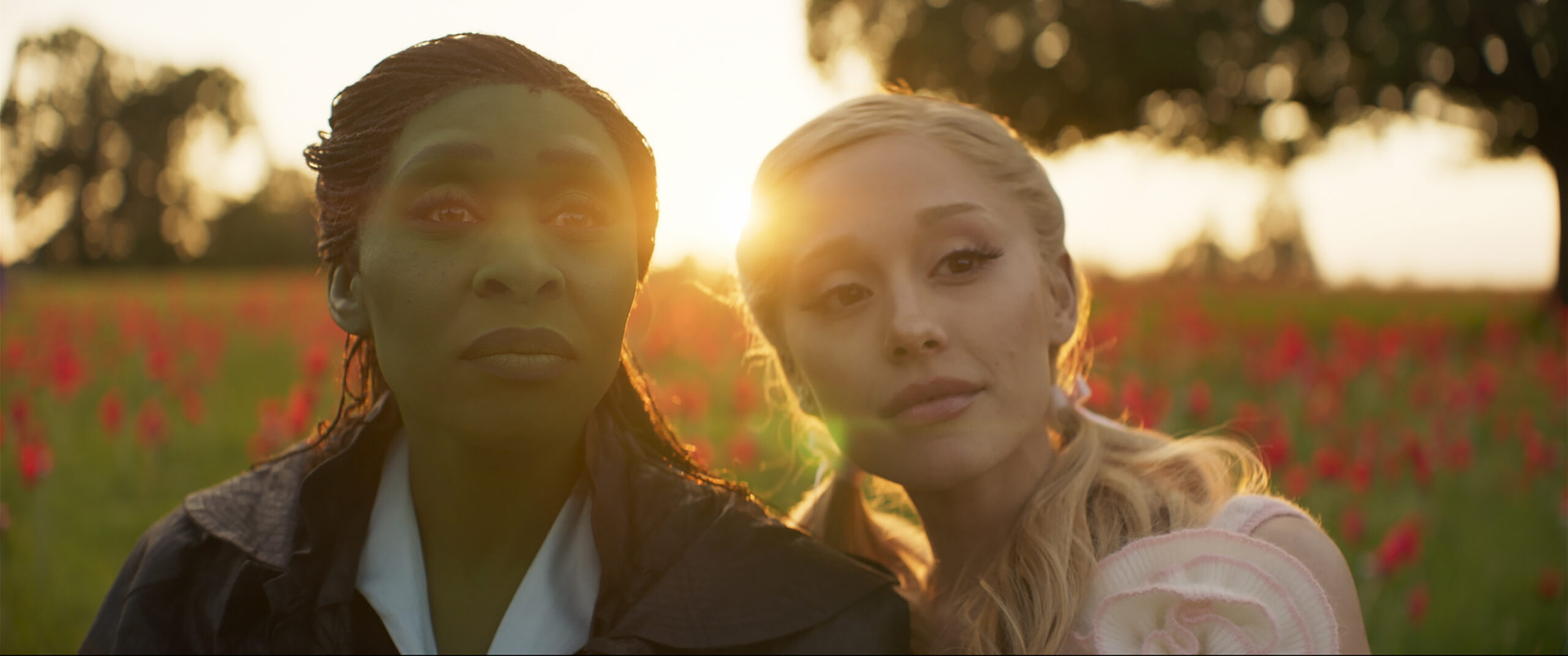
Set some time after the events of the first film and act, “For Good” sees Elphaba, played by Cynthia Erivo (“Harriet,” “Bad Times at the El Royale”), villainized by the Wizard of Oz, played by Jeff Goldblum (“Jurassic Park,” “Thor: Ragnarok”), and Madame Morrible, played by Michelle Yeoh (“Everything Everywhere All At Once,” “Crazy Rich Asians”). In order to keep the Wizard in the good graces of the people of Oz, they’ve fabricated a story of Elphaba and the talking animals of Oz being responsible for the recent issues in the land, propping up Elphaba’s former friend Glinda, played by Ariana Grande (“Victorious,” “Sam & Cat”), as the Good Witch of Oz and Elphaba as the Wicked Witch of the West. Elphaba’s attempts to speak truth to the people of Oz and dethrone the Wizard’s powers eventually come to a head as a tornado blows into the land, bringing a young Kansas girl along with it.

Notoriously so, the second act of “Wicked” as a Broadway musical is... less good than the first. Most of the moments and songs people know from the show all come from the first act, and that rings true for the film version as well. Like the first film, co-writers Winnie Holzman (“Roadies”) and Dana Fox (“Cruella,” “The Lost City”) have expanded the second act as well, adding additional scenes and, unlike with the first film, new songs. Those expansions, unfortunately, add little to the overall story and serve to simply extend what is already a fairly long and overdrawn film. The two new songs added certainly fit within the film (if you didn’t know they were added, you likely wouldn’t notice), but they are fluff compared to the others, repeating already established plot and character developments in a different way.

Erivo and Grande’s performances are still fantastic, and when the pair of them are together, the film becomes magical. The gradual evolutions of these characters are really fascinating to watch, and their arcs help the film build toward its gradual point about fascism and media manipulations. Goldblum keeps the same kind of weird, very Goldblum-y charm that he always has in spades, and it keeps his wizard unique. Not much has changed about Yeoh’s performance in this film versus the first, however her singing is far grander here than before. Which is unfortunate as, in a film packed full of singers, Broadway and otherwise, her average voice stands out far more than it otherwise would.

The supporting cast feels mostly forgotten about this time around, with many of the performances being fine but simply disparate in the plot itself. Marissa Bode, Ethan Slatter (“Lost on a Mountain in Maine”), and Johnathan Bailey (“Jurassic World Rebirth,” “Bridgerton”) all return as Nessarose, Boq, and Fiyero respectively, but you’d be hard pressed to notice. While Bode's role is understandably slim, Slatter simply vanishes from the film for the entirety of the third act. Bailey meanwhile is more present but seems to have the same care given to his character as the one-dimensional damsels that populated 1960s black-and-white noir films. Their performances are fine, doing the best they can with what they’re given, but the script simply doesn’t do them any favors.

The biggest issue with why this second half simply fails to elicit the same excitement as the first really does come down to the script and overall plotting. Given the simultaneous shooting schedules, the film maintains the same fantastic costuming work, production designs, cinematography, and visual effects that helped bring this vision of Oz to life in the first. While there are a handful of odd sore spots, such as the film's interpretation of the Scarecrow, it's mostly excellent work across the board just as before.

“Wicked: For Good” was likely always going to be a slight dip from the first film given the status of the original musical’s second act. However, the new songs and expansions certainly don’t help matters. As it stands, this is still an entertaining film, with performances that help overcome the weaker extended material almost in spite of itself. The technical merits remain as great as the first film’s, and those who are already completely on board are unlikely to be swayed, but the magic isn’t as strong as before. 3.5/5

Friday, November 14, 2025

The Running Man (2025) - Review: Catch Me If You Can


If Hollywood is going to continue to dig up old properties and franchises and remake them until the heat death of the universe, then it at least stands to reason that they should remake some films that weren’t beloved to begin with. Works that didn’t live up to their original potential. The 1987 adaptation of “The Running Man” is certainly one of those works, tossing out all but the most basic concepts of Stephen King’s original novel to turn it into an Arnold Schwarzenegger action vehicle. And it wasn’t very good. Now, co-writer/director Edgar Wright (“Shaun of the Dead,” “Baby Driver”) has arrived to try this all too-pertinent concept once again, with a far more faithful adaptation and an up-and-coming movie star front and center.

Set in the near future, the film follows Ben Richards, played by Glenn Powell (“Twisters,” “Anyone But You”), a blacklisted blue-collar worker trying to scrap funds together to afford medicine for his sick daughter and get his family out of the slums permanently. That’s how he happens upon “The Running Man,” a ultra-violent reality show watched by millions created by super producer Dan Killian, played by Josh Brolin (“Avengers: Infinity War,” “Dune (2021)”) and hosted by Bobby T, played by Colman Domingo (“euphoria,” “Sing Sing”). The show allows people to attempt to run from the general public and a group of skilled Hunters, led by McCone, played by Lee Pace (“Pushing Daisies,” “Foundation”), for thirty days in an attempt to win $1 billion at the end. Against the better wishes of his wife Sheila, played by Jayme Lawson (“The Batman,” “Sinners”), he enters believing he can win and change the rigged game for good.

It’s not hard to imagine why a director like Wright would want to tackle material like this. The ripe social satire and commentary on reality television, as well as media manipulation, has only become more relevant in recent years. He and co-writer Michael Bacall (“Scott Pilgrim vs. The World,” “21 Jump Street (2012)”) have zeroed in on the novel and Richards’ intense anger in an exceptionally compelling way. Regardless of anything else in the film, the idea of this man and the world broiling just below the surface at the media conglomerates is executed wonderfully. It gives everything a distinctly fiery personality, and it helps to smooth over the film’s rough edges. It also allows Powell some material that really lets him explode. He's a great lead, riding the line between an action hero and an every-man. Thankfully he’s more than just a muscular exterior, and he gets a lot of room to run around with ingenuity and smarts.

The surrounding cast are all fine enough, with Domingo and Brolin being particular standouts. However, the nature of the pseudo-road trip adventure is that no one really gets to make a particularly large impact. A late game addition of civilian Amelia, played by Emilia Jones (“CODA,” “Locke & Key”), kidnapped by Richards in the third act, injects some perspective into the adventure by setting him up against someone from the upper crust, but it feels like a band-aid to jam more perspectives into the film. The rest of the supporting cast outside of Domingo, Brolin, and Jones are just underutilized. Outside of the central anger at the establishment, the rest of the scripts themes feel half-baked and underutilized, as if Wright and Bacall went through a checklist of dystopian thriller ideas and what to include.

From a technical standpoint, the film’s production design and sets are fantastic. The grim and smudge of this vision of future America is detailed and fun to explore, and the pacing is quick and frenetic. As stated before, while the film has a lot of ideas it mostly just gives surface glances to, it keeps everything moving along briskly for the two-hour-and-thirteen-minute runtime. However, for as nicely as everything moves along and as good as the world looks, you’d be hard-pressed to say this feels remotely like an Edgar Wright film. It’s a competently shot action-adventure film, but the filmmaker’s signature style is gone. There’s no fun camera tricks from cinematographer Chung-hoon Chung (“Last Night in Soho,” “IT (2017)”), editing tricks, or any flourishes whatsoever. Even the musical score from Wright’s longtime collaborator Steven Price (“The World’s End,” “Baby Driver”) is a generic bunch of action movie musical touches. Energetic, sure, but generic as hell.

While its certainly much better than the 1987 original film, it's hard not to view Edgar Wright’s version of “The Running Man” as at least a semi-disappointment. For a director as stylish and unique as him, to have a pet project of his result in a film that feels almost indistinguishable from any other director is sad. The deep-seated sense of anger at the world and Powell’s great lead performance makes it a watchable good time, and the film certainly still looks good and moves along well. But for those expecting the next mega hit in Wright’s filmography might want to keep on walking. 3.5/5 

Friday, November 7, 2025

Predator: Badlands - Review: Welcome to the Hunt


Reappraisal is a funny thing within the world of 1980s nostalgia. While a fair share of maligned films from the era have been looked upon fondly nowadays, the “Predator” franchise is one that’s been mostly respected rather than liked. Sure the first film is good, and the design of the titular alien killer is cool, but you aren’t likely to find someone willing to watch the franchise at the drop of a hat like they would the “Alien,” “Back to the Future,” “Indiana Jones” “Die Hard,” or “Ghostbusters” franchises. That is until Dan Trachtenberg (“10 Cloverfield Lane,” “The Boys”) came along and effectively revitalized the franchise, directing three films back-to-back; 2022’s excellent “Prey,” “earlier this year’s adventurous and fun anthology film “Predator: Killer of Killers,” and now this latest film, his first theatrical “Predator” tale: “Predator: Badlands.”

Set in the distant future, the film follows Dek, played by Dimitrius Schuster-Koloamatangi (“Red, White, and Brass,” “The Panthers”), a young runt in a clan of Yautja (the alien species we know as Predators). After his Father, played by Reuben De Jong and voiced by Schuster-Koloamatangi, sentences his to death due to his size and weakness, Dek sets off for Genna, the deadliest planet in the galaxy, on his first hunt. While on the planet, he befriends Thia, played by Elle Fanning (“The Great,” “Super 8”), a friendly damaged Weyland-Yutani synthetic who agrees to help Dek on his quest to find and kill the legendary Kalisk, a creature also sought by Thia’s fellow synthetic and surrogate sister Tessa, also played by Fanning.

In a franchise first, Trachtenberg and co-writer Patrick Aison (“Prey (2022),” “Last Light”) have made the smart decision to center this adventure around a Yautja itself. As opposed to previous films, which feature the alien as a monstrous force attempting to hunt and slaughter the other human characters, here we get to see a side to the creature and their culture never explored before. It’s hard to say it was necessary or revelatory, but it's an amount of care and expansion rarely seen in modern day blockbusters. It being tied directly to Dek’s story and evolution also means that it never feels as obvious or eye-rolling as moments like “when Han Solo got the name Solo” or things like that. Plenty of these moments also work fantastically as simple setups and payoffs. This is a tight and simple script, and Trachtenberg and Aison know how to set up an item, creature, device to later have it used in spectacular fashion. It’s a perfect example of how you don’t need a complicated setup to give way to a wonderful payoff.

Schuster-Koloamatangi's physical performance is remarkably impressive here. Given the fact that the Yautja’s face is mostly CGI, it means much of his performance has to be communicated physically and vocally. He does a remarkable job getting us to care for this alien killer, using some easy short hands to communicate where he’s at emotionally at the start of his journey. Like the script, his performance is a great example of effective simplicity, allowing Dek to evolve throughout the film from a runt of his clan to a formidable warrior and letting us attach to that journey with him. Fanning is fantastic as well in her dual roles; she manages to deliver two very different interpretations of the same character dynamically, with Thia easy to fall in love with and Tessa easy to hate. She’s the cherry on top of a simple, effective, physically demanded cast at the center of this adventure.

Given the focus on an alien species notorious for its brutality and weaponry, you’d hope that the action and stunt sequences are up to snuff, and thankfully Trachtenberg and his team have delivered the goods here. While the look of the film itself is on the flatter and blander side, the action is well worth it. There are plenty of fantastic sequences of practical and digital effects work, meshing together to deliver Dek’s epic adventure through the jungles and creatures of Genna. The PG-13 rating doesn’t hold this tale back either: while there might not be any red human blood, it’s still a gruesome and delightfully viscously violent tale.

As the guttural chants and deep growls of Sarah Schachner (“The Lazurus Effect,” “Prey”) and Benjamin Wallfisch’s (“Blade Runner 2049,” “IT (2017)”) excellent musical score shade this tale of a warrior’s journey in a sense of brutal menace, what’s at the core of Trachtenberg and Aison’s story is much more ambitious for the franchise. It might be hard to believe, but there’s a legitimate emotional core at the center of this film and Dek’s journey that works excellently. Like most of the film’s strengths, it’s an example of the effective simplicity at the core of Trachtenberg’s work here. It’s nothing exceptional, but there is something surprisingly moving about this Yautja’s tale.

“Predator: Badlands” continues Dan Trachtenberg’s streak of bringing new blood to the franchise and delivering some of the best stuff it’s ever seen. This third film delivers on its intriguing premise with remarkably effective simplistic approaches to its story, action, setups, and emotional arcs, even if the film’s look is blander than one would expect. It’s a popcorn movie through and through, but an excellent one that will satisfy anyone looking for a thrill, whether they’re familiar with the Yautja’s previous exploits or not. 4.5/5 

Die My Love - Review: One Crazy Mother


The prospect of going to the movies to specifically seek out a “bad time” might seem foreign to some. But some directors make their living off of tackling uncomfortable, unpleasant, or downright confusing ideas on the big screen. Lynne Ramsay (“We Need to Talk About Kevin,” “You Were Never Really Here”) is one of those directors, and she’s returned with a new project featuring two of cinemas most flexible actors and source material that’s been described simply as “uncomfortable.” It’s an interesting one to say the least.

Based on the 2012 Spanish novel by Ariana Harwicz, “Die My Love” follows Grace, played by Jennifer Lawrence (“The Hunger Games,” “No Hard Feelings”), and Jackson, played by Robert Pattinson (“Twilight,” “The Batman”). They’ve just moved into a house in the countryside and Jackson is off every day working in the city, leaving Grace at home alone with their new baby. As the days grow longer, Grace finds herself slipping into madness, injuring herself around the house, and slowly dipping more and more into post-partum depression, much to the fear of Jackson.

How to describe this film is as much a question as what actually happens in this film, as much of the time it borders on being indescribable in its events and the order in which they appear. Co-writers Ramsay, Enda Walsh (“Hunger,” “The House (2022)”), and Alice Birch (“Dead Ringers,” “Normal People”) craft a film that feels more like a series of segments in Grace’s larger journey into madness than a strictly coherent three-act structured film. It’s a film that coasts along on vibes and energy rather than any narrative structure, and while your mileage may vary with that kind of approach, it’s nevertheless effective in evoking this very specific emotional panic.

This is Lawrence’s film, no doubt about it, and she carries the entire thing from start to finish. It's the sort of project most actors would die to get a hold off, taking material that’s this elaborate and metaphorical and running away with it. Regardless of your opinion of the rest of the film, her performance is undeniably fantastic. Pattinson gets just as much to sink his teeth into, delivering a wild and crazed performance to match hers. Given that the film is entirely her tale, he doesn’t get as much to play with, but he’s great regardless and any scene where they’re at each other's throats is a great time.

Meanwhile, anyone outside of Lawrence and Pattinson gets a lot less to work with. Sissy Spaeck (“Badlands,” “Carrie (1976)”) has a fun, but all to brief role as Jackson’s mother Pam. She lights up the screen when she appears, adding an older female perspective to Grace’s turmoil, but nothing substantial as a character. LaKeith Stanfield (“Sorry to Bother You,” “Atlanta”) pops up for what charitably might be two lines and 5 minutes of screentime as a pseud-imaginary affair for Grace named Karl, and the film simply wastes him. Nick Nolte (“48 Hrs,” “The Prince of Tides”) appears briefly as well as Harry, Jackson’s elderly father who somehow manages to deliver great warmth and humor despite being just as brief as Stanfield, if not moreso.

There is clearly a goal in the visuals, editing, and cinematography to evoke the kind of unhinged, slowly escalating madness that Grace is going through but in film form. Large swaths of the film have little to no dialogue and the musical score ratchets up at random points mixed in with needle drops from everything from “Love Me Tender” to “Hey Mickey” to “Souljacker Part 1.” Cinematographer Seamus McGarvey (“Atonement,” “Anna Karenina”) crafts a look that somehow makes the surrounding forest and open house claustrophobic, draped in some positively gorgeous nighttime photography. The musical score composed by George Vjestica (“The Sky Above Zenica”), Raife Burchell, and Ramsay is deeply unsettling, when it does appear, while also maintaining a playfulness purposefully absent in the rest of the film.

Ramsay’s vision for this film is a clear and deliberate one; it's just that said vision is one meant to evoke specific feelings and interpretations rather than present a concise narrative structure. It’s a viewing experience that feels purposeful even in the moments it becomes challenging to parse. The ending in particular is a perfect example of the film’s daring visual and metaphorical goals while also settling into a very specific vibe and refusing to explain itself further. While not so much the sort of “art house” film shown in museums, it's definitely not a mainstream hit and that should be noted for any viewer going in blind.

“Die My Love” certainly accomplishes its goals of maintaining a specific vibe somewhere between despair and feminist rage, without ever tipping its hand to explain what it's all specifically “about.” Lawrence and Pattinson run away with their roles, helping to ground the project in their excellent performances, even amongst a mostly wasted supporting cast. It's hard to say that anything in this film is “bad” or didn’t accomplish exactly what Lynne Ramsay set out to do. It’s just hard to say that it’s a good recommendation for anyone who would normally turn their nose away at a film like this. If you can get on its wavelength though, it’s a hell of an entertaining piece of madness. 3.5/5