Friday, August 26, 2022

Three Thousand Years of Longing - Review


When you make a movie as successful critically and commercially as “Mad Max Fury Road,” its understandable that your next project will likely have more creative freedom than what otherwise might be expected. That’s to say George Miller’s (“Happy Feet,” “Babe”) latest trippy, fantastical adventure “Three Thousand Years of Longing” is exactly the kind of weird, wonderful, and messy tale one expects from a director fully letting his ambitions run wild.

After accidentally unleashing an ancient Djinn, played by Idris Elba (“Molly’s Game,” “The Suicide Squad”), historian Alithea Binnie, played by Tilda Swinton (“Adaptation,” “Michael Clayton”), is granted three wishes from him. Worried about the potential twists from said wishes, Alithea refuses to make any, leading the Djinn to tell her the stories of his past masters in the hopes of easing her anxieties about making magical requests of him.

The film has quite a lot going on at any moment, and even a brief plot summary like that doesn’t get into nearly half of what the film has going on. Besides Swinton and Elba, the cast consists mostly of unknowns doing an absolutely fantastic job of filling out Miller’s fantastical world of Queens and Kings and mythological creatures. Highlights include Aamito Lagum as The Queen of Sheba and Burcu Gölgedar and Zefir, a genius inventor and one of the Djinn’s masters.

Elba and Swinton are both terrific, with Elba really taking on a larger-than-life persona due to both his narration and his portrayal of this ancient genie. He plays things up to portray this fantastical character, but without letting his performance ever get silly or veer into the cartoonish. Swinton maintains an oddball, awkward streak throughout her performance and its an easily likable character given her loneliness and the emotion put into the role.

The world of this adventure is absolutely fantastic, bringing this weird version of the past to life in a very Terry Gilliam-esque way, without sacrificing Miller’s love for the oddball. It’s a perfect blend of various filmmaking techniques, from visual effects to practical sets to some truly excellent cinematography from John Seale (“Mad Max Fury Road,” “Harry Potter and the Sorcerer’s Stone”), all draped in vibrant colors proving Miller can still serve up a feast for the senses even this late in his career.

However, the film’s plot and pacing aren’t nearly as fluid and fantastical. It’s a film that both embraces its segmented storytelling nature but also suffers from it. So much of the script, written by Miller and Augusta Gore, hops around from present day to past stories that when it finally stops hopping around and focuses on one story, it feels odd and out of place. Not that any of the stories are bad or lack Miller’s specific touch or attention, it’s just the natural byproduct of jumping around so many times for so much of the film. It also doesn’t help that this is a film that’s quite deliberately paced, moving at its own speed. It doesn’t feel longer than it is, but it’s certainly not a quick trip either.

Where “Three Thousand” succeeds with nary a fault is in the clear big beating heart of the picture. This is one of those big messy movies that a director gets to make once they’ve gotten to a certain point in their career, where it might not all work perfectly, but the central emotional core of the film is so solid that it makes up for a lot.

Miller has crafted a love letter to the simple act of telling stories and to what telling stories can tell us about the storyteller. It’s the big gooey emotional core at the center of everything and it really works. It’s impossible to say if it’ll win over everyone or make up for the film’s issues for everyone, but at the end of the day, this is a film about storytellers, made by a storyteller, that’s a love letter to telling stories that will most likely be the most beloved by those who love telling stories.

“Three Thousand Years of Longing” is a big, emotional, messy film. Elba and Swinton are great, as is the rest of the ensemble cast, all putting on some fantastic and fantastical stories in gorgeous locations shot with excellence and bursts of color at every moment. It’s a shame it doesn’t all feel as precise or smooth as it could have, but this is a film made with its heart on its sleeve and a grand story to tell, for better or worse. 4/5

Friday, August 5, 2022

Prey (2022) - Review


Few series are more iconic and also more turbulent as the “Predator” franchise. What started as a fun, low-budget alien action film that bordered on horror spiraled into a series of high budget action films with increasingly low box office returns and increasingly low audience satisfaction. So it makes sense then that the now Disney-owned 20th Century Studios would drop this latest installment simply on Hulu. Which is a shame, because its arguably the best film in the entire series and might be the best action film of 2022 so far.

Set in 1719, “Prey” follows Amber Midthunder (“Legion,” “Roswell, New Mexico”) as Naru, a young Comanche warrior who wants to prove herself to her tribe and older brother Taabe, played by Dakota Beavers in his film debut, by completing “kuhtaamia”, a hunt of something that also is hunting you. Mix a young Predator and his more primitive weapons in and you have an interesting twist on the formula put in place by countless other films in the series.

Midthunder is absolutely incredible. She’s a fierce force during the action sequences, staking her claim as a potential future action star with her ability to throw herself into the set pieces. But she also nails the films emotional moments, with many harrowing encounters with the harshness of the wilderness and her tribe showcasing some great understated, and sometimes wordless, acting.

Beavers is also a standout. His is a great character in Taabe, balancing his support of Naru and his concern for her as well. He’s an absolute highlight and when he and Midthunder are on screen together, the movie shines. The supporting cast is rounded out with some great performances as well, like Michell Thrush (“Blackstone,” “Bury My Heart at Wounded Knee”) as Naru and Taabe’s mother Aruka, and some others that won’t be spoiled here.

Writer/director Dan Trachtenberg (“10 Cloverfield Lane”) and co-writer Patrick Aison (“Treadstone,” “Wayward Pines”) craft a consistently engaging action film that works on multiple levels for multiple reasons. Some are obvious, like how the film spends time characterizing the Predator himself, showcasing some of the ways he’s different and younger than those we’ve seen before. They also make sure the events of the film are paced perfectly to build tension and to make the arcs emotionally satisfying.

When the action starts to fly, it really starts to fly, and some impressive practical effects work and cinematography helps to sell the chaotic, alien action of it all. These are people who are far outmatched by the Predator and watch it all unfold is an adrenaline rush of an experience. It never feels cruel or mean, always set up and planned in effective, inventive ways, making sure to never lose track of the people at the center of the scenes, even as they might be getting butchered.

Outside of the action, the film is still exceptionally well shot. Cinematographer Jeff Cutter (“10 Cloverfield Lane,” “A Nightmare on Elm Street (2010)”) shoots the natural landscape with clarity and an eye for the beauty of the wooded landscapes. It serves as an effective contrast not only for the action that takes place within these landscapes, but also helps to calm the audience and characters once the action has subsided momentarily. The nighttime footage is also incredibly gorgeous, and there are multiple sequences of natural beauty so calming its almost arresting.

“Prey” is also the second film Trachtenberg has directed based on a property he did not initially create, after “10 Cloverfield Lane” and its also the second film in which he’s shown his innate talent to twist a familiar property into a new and unique vision without sacrificing what made it initially interesting. Anyone looking to revitalize their franchise who isn’t thinking of hiring him to do it should reevaluate their priorities.

If there’s anything to critique “Prey” for, its one thing outside of Trachtenberg and Midthunder’s control, and that’s the well-documented lack of a theatrical release. Why Disney decided to dump this straight to Hulu is a mystery, but where you watch it doesn’t change the fact that this is an exceptional action film, not only an easy high for the franchise, but also a movie that knows how to balance blood and adrenaline with emotion and deep characterization. It’s carried by Midthunder’s excellent performance, and one can only hope this isn’t the last fight we see between her and these alien hunters. 4.5/5

Bodies Bodies Bodies - Review


Is there any target more ripe for ridicule and parody then that of the self-obsessed “gen Z” youth? Well, yes, there are plenty of targets just as equal, but “Bodies Bodies Bodies” sets its sights squarely on the rich and privileged; the young folk who seem to have all the money in the world and none of the consequences of it.

Set in the midst of a “hurricane party,” the film follows a group of 20-something friends: Bee, played by Maria Bakalova (“Borat Subsequent Moviefilm,” “The Bubble”), Sophie, Bee’s girlfriend, played by Amandla Stenberg (“The Hate U Give,” “Dear Evan Hansen”), Sophie’s childhood friend David, played by Pete Davidson (“Saturday Night Live,” “The King of Staten Island”), his actress girlfriend Emma, played by Chase Sui Wonders (“Daniel Isn’t Real,” Genera+ion”), podcaster Alice, played by Rachel Sennott (“Shiva Baby,” “Call Your Mother”), her older boyfriend Greg, played by Lee Pace (“Guardians of the Galaxy,” “Pushing Daisies”), and another childhood friend of Sophie’s Jordan, played by Myha’la Herrold (“Industry,” “Plan B”), dealing with a potential killer in their midst after the power goes out and one of them ends up dead.

The script, written by Sarah DeLappe from a story by Kristen Roupenian, is absolutely razor sharp and doesn’t do any of the film’s big egos any favors. Even as events seem dire, biting comments and acidic critiques are thrown back and forth, setting tensions high. Director Halina Reijn (“Instinct”) uses it like a kind of exercise in intensity that’s bolstered not just by the whodunnit nature, but also the crumbling friendships amongst it all. It stumbles a bit with some of the specific turns of phrase that leave it sounding less authentic than it seems, but the underlying wit is strong throughout.

With such a small cast, it’s a good thing everyone manages to be pretty fantastic. Pace and Davidson are both pillars of male idiocy toxicity in the best way, and each of the girls manages to carve out their own personality. For as much as the satirical elements want to paint these types of party girls as bad people, DeLappe at least puts effort into making them realized, fleshed out people by the end.

Even if the entire cast is stellar, the film is carried by Bakalova and Stenberg’s performances. Sophie and Bee are an engaging couple and are also extremely likable from the start. As things get more and more desperate, their likability might falter, but the performances never do. Bakalova in particular is the heart of the movie, easy to understand and empathize with the moment the shit hits the fan.

What might be the most impressive feat of this low budget whodunnit is the camerawork. For a film set almost entirely in the dark, illuminated by iPhone flashlights and glow sticks, there’s a lot of fantastic framing and cinematography from Jasper Wolf (“Dead & Beautiful,” “Monos”). It maintains a level of chaos and mystery, inviting audiences to lean forward and squint at the screen alongside the characters to try and see what might be around a corner or hidden in the pitch black. It’s a kind of controlled darkness and misinformation that works exceptionally well alongside the chaotic, almost malfunctioning electronic score from composer/musician Disasterpeace (“It Follows,” “Marcel the Shell with Shoes On”).

The film’s biggest weak point isn’t something that’s executed poorly, rather it’s a hurdle that most won’t be able to overcome with the actual premise. It’s a bloody, nihilistic movie that could leave some viewers in an exasperated cold sweat by the end of its 95-minute runtime. The satirical nature of it all makes it a bit easier to swallow, but the ending twist especially could set some off with just how dreary things get. It’s a bleak affair and certainly not for everyone, but those who were already on board with the trailers will likely have a blast with this acidic, pitch black, bleak comedy.

If nihilism is your cup of tea and you’re in the mood to see some rich, narcissistic 20-somethings dead on the ground, run, don’t walk to A24’s latest horror party. With an acid-tipped wit and performances that embrace the unlikability of their characters, “Bodies Bodies Bodies” is a trip not for everyone, but tailor made for a certain group that will easily eat it up. 4/5

Bullet Train - Review


Sometimes, all you need is a good premise, some committed actors, and some action to make a fun, popcorn flick ready and made for audiences to just have a relaxing time at the movies. That might sound like damning with faint praise but given the glutton of forgettable action films that release each year, it’s a triumph that “Bullet Train” maintains a steady level of enjoyment, even if it doesn’t raise the bar.

The plot, strictly speaking, of this film isn’t exactly straightforward. Based on the Japanese novel written by KĹŤtarĹŤ Isaka, it follows Brad Pitt (“Interview with a Vampire,” “Moneyball”) as Ladybug, an assassin who takes a harmless snatch job after turning over a new leaf. However, he ends up wrapped up in a larger conspiracy after learning the briefcase he was sent to steal is being sought after by a pair of assassins named Lemon and Tangerine, played by Brian Tyree Henry (“Atlanta,” “Widows”) and Aaron Taylor-Johnson (“Kick-Ass,” “Nowhere Boy”) respectively, and a young assassin posing as an innocent schoolgirl named The Prince, played by Joey King (“The Kissing Booth,” “The Act”).

Eventually the plot ends up also involving a gaggle of other assassins such as Andrew Koji (“Warrior (2019),” “Snake Eyes”) as The Father, Hiroyuki Sanada (“The Last Samurai,” “Mortal Kombat (2021)”) as The Elder, Bad Bunny as The Wolf, and Zazie Beetz (“Atlanta,” “Deadpool 2”) as The Hornet, just to name a few.

It definitely is a jam-packed and chaotic film. Characters, cameos, and punches fly by with nary a moments notice. If anything, “Bullet Train” does manage to maintain a high level of energy and enthusiasm throughout the entire film which is certainly commendable. Pitt is rolling with all the punches, keeping up a demeanor that could be best described as if The Dude from “The Big Lebowski” became an assassin. He’s certainly having a blast, but honestly the film’s biggest successes are Henry and Taylor-Johnson as Lemon and Tangerine. The pair of British assassins have the best rapport, the best jokes, the best arc, and Henry in particular the best running gag throughout the film. They’re just a delight to spend time with and if the film had just been about them, its hard to say it wouldn’t be just as good.

Koji and Sanada are also great, effectively playing the straight men in this world of overblown craziness. They’re effective, but its hard to call them memorable against so many other actors who are, regardless of skill, playing everything at eleven. Bunny and Beetz are fine for their roles, but they’re closer to cameos than fully fleshed out performances. Meanwhile Joey King is… certainly doing some acting. She’s fine for the most part, but the more she amps things up, the more annoying she becomes. And not in a fun “she’s annoying the characters but not the audience” kind of way.

Thankfully, when you get a director like David Leitch (“Atomic Blonde,” “John Wick”) behind the camera, you’re going to have at least a base level of quality action filmmaking. While not nearly as inventive or seamless as some of his past works, there’s still a lot of fun action choreography here and its without a doubt far better than your average blockbuster. The train is also a highlight, with multiple cars fully built out practically and slowly being destroyed throughout the film. The production design is just top notch, and even the few brief glimpses we get at various train stops are filled with color and life. It’s a delight to watch the carnage unfold, and only really devolves into CGI unwieldiness in the last 15 minutes.

Meanwhile the script, adapted by Zak Olkewicz (“Fear Street: Part Two - 1978”), is certainly choked full of odd scenarios and one-liners. It’s hard to call the overall plot good, but it’s certainly serviceable and coherent enough. Every actor delivers their lines well and with the right amount of comedic emphasis. There’s also something to be said for the twists, as the movie keeps audiences and Ladybug on the same page throughout, allowing them to put the pieces together as he does. There are numerous threads to follow and breadcrumbs throughout, making it a fun mystery to puzzle out in between all of the chaos.

It's hard to call “Bullet Train” bad. It’s absolutely derivative of other R-rated action-comedy romps, but the cast is committed, for better or worse, and the action is particularly solid throughout. Package that with a puzzling story to solve and a backdrop of colorful and gorgeous landmarks and you’ve got the makings of a pleasant, if not particularly revolutionary, popcorn flick that should easily satisfy those who seek it out for those thrills and not much else. 3.5/5

Friday, July 29, 2022

Vengeance (2022) - Review


Deep in the heart of the south, direct in the center of the great state of Texas, BJ Novak’s (“The Office,” “The Newsroom”) directorial debut “Vengeance”, which he also writes and stars in, takes a yuppie New York wannabe-true-crime-podcaster and puts him smack in the middle of conspiracy and paranoia as well as deep fried twinkies and rodeos.

After an abrupt phone call from her brother Ty, played perfectly by Boyd Holbrook (“Logan,” “Narcos”), Novak’s Ben Manalowitz flies from New York to West Texas for the funeral of a one-time fling from New York, Abilene Shaw, played via video footage by Lio Tipton (“Warm Bodies,” “Crazy, Stupid, Love”). However, after Ty tells Ben he believes she was murdered and wants his help to solve the mystery, Ben begins recording the search in the hopes of turning it into a true-crime podcast.

Rounding out the cast is Dove Cameron (“Descendants,” “”Dumplin’”) as Kansas City, Ty’s younger sister, Issa Rae (“Insecure,” “The Lovebirds”) as Eloise, Ben’s friend and producer, Ashton Kutcher (“That 70s Show,” “jobs”) as Quinten Sellers, a music producer based out of Texas, Isabella Amara (“Wilson,” “euphoria”) as Ty’s other younger sister Paris, J. Smith-Cameron (“Succession,” “Rectify”) as Sharon, the matriarch of the Shaw family, Louanne Stephens (“Friday Night Lights,” “Longmire”) as Granny Carol of the Shaws, and Eli Bickel as the youngest of the Shaws, referred to as El Stupido.

Even as the writing sometimes fails to do the characters justice, every member of the cast does a great job of bringing their characters to life with their performances. Sure, Kansas City might be a bit one note and Eloise spends a lot of time just talking to Ben on the phone, but even within that Cameron and Rae are doing their damndest to do right by these characters.

Novak has written plenty of smart things before, be they children’s books or television episodes, but “Vengeance” is clearly his most ambitious work yet for numerous reasons. Likely the biggest is the simple fact that he’s trying to turn the fish-out-of-water, us-versus-them American revenge story on its head. There’s clearly so much effort put into the characterizations of the “Texan yokels” to help set them apart from the more one-note stereotypes that have existed for years.

It's a kind film in that way. Novak clearly wants to give these people the time and respect they deserve. It leads to some odd bits of humor though when the jokes seem derived from how stupid they are, but things smooth out as the film’s real target for humor and for the message becomes clear.

Even as the mystery aspect of the film fails to rise to the heights Novak might have wanted, it all works so well because of the characterizations. Holbrook endears you to his character so early and so earnestly that it helps to open you to the rest of these Texans. He’s the heart and soul of the film and its so easy to love him and by extension love the film through him.

If there’s one thing that does suffer, it’s the film’s ending. While the overall themes and ideas work and are still in line with the rest of the film, there’s a particular moment in the film’s final ten minutes that feels extremely out of place and character.

Besides that, though, for a debut, the film looks nice enough, shooting the massive Texas open plains with an appropriately plain point of view that does end up working well. Oddly, the musical score from musician Finneas O'Connell might be the biggest standout aspect of the film, injecting a healthy amount of electronic vibes and heavy synths to this dusty trail mystery.

For a feature directorial debut, there are plenty of places that “Vengeance” could have gone wrong. And while it doesn’t avoid all of the pitfalls of both the “smart Yuppie” story or the first-time feature, Novak does construct an interesting mystery packed with fun and lovable characters that’s consistently interesting and amusing if not as profound as it expects it to be. Oddly enough, for a film about a podcaster, the biggest lesson that could’ve helped this film is “show, don’t tell.” 4/5

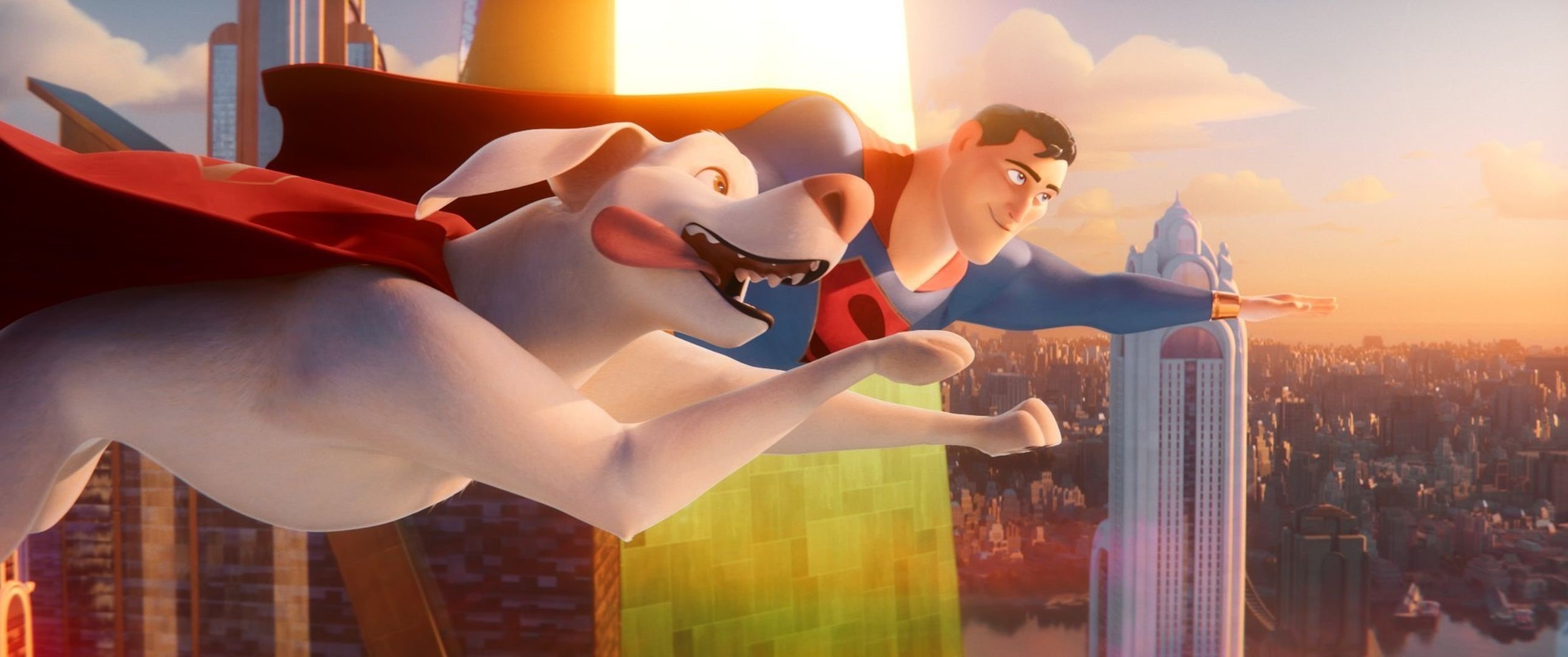
DC League of Super-Pets - Review


It’s hard to watch any animated, semi-self-referential, family friendly, based-on-a-DC-property comedy without immediately thinking of “The LEGO Batman Movie.” It might seem unfair to do so, and maybe it is. But as the only other theatrically released animated DC film, and one that was animated by the same studio as “League of Super-Pets”, its hard not to. But even without that comparison, “Super-Pets” flaws would be plain to see, if not particularly egregious or damning.

Following Krypto the Super-Dog, voiced by Dwayne Johnson (“Jungle Cruise,” “Moana”), the film follows his attempts to rescue Superman, voiced by John Krasinski (“The Office,” “A Quiet Place”), and the rest of the Justice League after their capture by the maniacal guinea pig Lulu, voiced by Kate McKinnon (“The Spy Who Dumped Me,” “Saturday Night Live”). He teams up with a group of shelter pets who find themselves with newly acquired superpowers; Ace the dog, voiced by Kevin Hart (“Jumanji: Welcome to the Jungle,” “The Secret Life of Pets”), PB the pig, voiced by Vanessa Bayer (“Saturday Night Live,” “Trainwreck”), Merton the turtle, voiced by Natasha Lyonne (“But I’m A Cheerleader,” “Russian Doll”), and Chip the squirrel, voiced by Diego Luna (“Rogue One: A Star Wars Story,” “Narcos: Mexico”).

It's hard to call any of the vocal performances good, but they certainly aren’t bad either. Johnson is clearly enthusiastic in his super role, McKinnon might not be doing a lot of acting besides an “evil” accent but she’s clearly having fun, and even Hart puts a bit of gruffness into his normal speaking voice for the role. Nobody is bad, but the best performances in the film are the blink and you’ll miss it ones. Krasinski’s Superman feels like the best version of the character since the 90s animated series purely because of how joyful he is, and Keanu Reeves’s (“The Matrix,” “John Wick”) borderline cameo as Batman is one of the film’s most inspired choices.

The lack of truly memorable voice talent hints at a much larger issue for the film as a whole. It is nice to hear a group of mostly comedians, those who have experience contorting their voices, play most of the characters, but no one stands out. It’s easy to place blame at the actors, but a large part should also be placed on the film’s overall lackluster script. Honestly, it’s fine if the plotting of a script is predictable (and this one absolutely feels like its been duct taped together from ten different animated films from the last decade) but if the humor starts to become grating, then that’s an entirely different issue.

Written by Jared Stern (“The Watch,” “The LEGO Batman Movie”) and John Whittington (“The LEGO Batman Movie,” “Sonic the Hedgehog 2”), with Stern also directing, the script feels like the first draft of a joke book based around superheroes. It’s not just that the jokes are groan worthy most of the time, its that most of them were old hat ten years ago. Lines like “I have superpowers and I don’t even have a dead uncle” or “Why couldn’t I have gotten a magic hammer or something?” are cheap at best, but they’re at least far preferable to ones like the classic “how did that embarrassing photo get in there?” bit. But there are also some truly bizarre moments like how Merton the turtle will openly curse and be censored throughout the film. Not like a joke curse or censored by someone talking over her, like an actual television bleep noise curse. It’s really weird.

Animation wise, things aren’t much better. Despite being animated by Animal Logic, the studio behind “Legend of the Guardians,” the “LEGO” film series, and the “Happy Feet” series. Every film obviously requires a different look to sell it, and there are things admirable about the art direction in “Super-Pets.” But it also just feels so simplistic. The backgrounds and buildings might have a cool, pseudo art deco look to them as if referring back to the 90s Superman animated series. But Krypto and his friends look bland, smooth, and overly simplistic, as if they’re ready made to be dropped into an HBO Max original series with a significantly lower budget. That being said, like the art deco look, the lighting is quite strong across the film, especially in the third act where the look becomes much stronger.

Despite all of these criticisms, there’s one thing that “Super-Pets” has in spades and that makes it all worthwhile. It’s a relatively sincere film, though still not afraid to undercut an emotional moment with a poor joke. But when it is legitimately being sincere, it sneaks into your heart in ways that only a movie about pets and their owners can. The third act is also remarkably engaging once the action starts, making sure the film absolutely ends on its highest note.

While it would be nice if Stern and Whittington’s script was more confident in its sincerest moments and had far stronger jokes, the overall experience of “DC League of Super-Pets” (the official title, annoyingly) is a relatively painless one. The voice acting is perfectly fine, even pretty good at times, and the moments where the action picks up and the sincerity actually lands are engaging and fun. It’s a shame that this couldn’t have been the entire film, but in a world of increasingly mediocre family films, you could do a lot worse. 3/5

Friday, July 22, 2022

Nope - Review


There is arguably no one in modern cinema who’s name alone can get butts in seats other than Jordan Peele (“Get Out,” “Us”). It might seem like an exaggeration, but people rarely show up for Marvel movies for the directors, and even sure things like Spielberg, James Gunn, or Ridley Scott all had acclaimed movies underperform in the last year. The secrecy surrounding his latest film also likely helps a great deal as, even compared to “Get Out” and “Us”, many who’ve seen the film’s marketing are seeing it simply to answer the question: “What the hell is going on?”

Daniel Kaluuya (“Get Out,” “Judas and the Black Messiah”) and Keke Palmer (“Hustlers,” “Akeelah and the Bee”) bother star as siblings OJ and Emerald Haywood. They run a horse training ranch for Hollywood productions in the Agua Dulce gulch in California and one night, while out with one of the horses, OJ swears he sees something flying around in the sky.

That’s all the plot details that’ll be recapped here, and even that might be slightly too much info to give. Unlike Shyamalan movies or the likes of “Avengers: Endgame”, this isn’t about spoiling a twist or a big reveal. Peele’s proven himself as a master of suspense, of the slow, earned reveal. His films feel like tricks; its no mistake that when the first trailer for “Nope” was released, most seemed suspicious of how much it showed and how much Peele might be messing with audiences.

Regardless of its content, “Nope” is Peele’s most gorgeously shot film yet. Working with cinematographer Hoye van Hoytema (“Dunkirk,” “Tenet”), these wide expanses and inky blue nighttime sequences are shot with such clarity and openness that it almost feels like an expansive documentary. Not only are these shots gorgeous, but they also provide the perfect canvas for the film’s big spectacles to play. It’s a gorgeous display of naturalistic beauty juxtaposed against otherworldly horrors. Some of these sequences are the stuff of nightmares, but not coherent ones, instead recalling the nightmares that are the scariest because they’re made of shapeshifting dream imagery and the horror comes from not being able to decipher what you’re looking at quickly enough.

Michael Abels (“Get Out,” “Us”) returns to score Peele’s latest, and his music is as infectious as always. Building constantly with calming strings to crescendos filled with choral chants and horns, it’s a score that pays just as much tribute to the alien movies of Spielberg as the film itself does. More so than ever before though, Peele and his crew have nailed the sound design and mixing here. Effects and music blend together in such effective, haunting ways, and it mixes the entire film together to be a true spectacle in every sense of the word.

Kaluuya turns in a performance here just as good as his prior films, although much more understated. It’s likely no accident that his character trains horses for a living, as much of the emotional weight he pulls into the film feels like that of a John Wayne-era cowboy: calm, collected, plotting, with a steely-eyed gaze only strengthened by his legendarily beautiful eyes. Palmer, meanwhile, is the film’s absolute standout. What begins as a character with a clearly comedic edge instead becomes one of intense emotional resolve. She’s a delight the entire time, finally getting a role deserving of her long career in the industry.

Steven Yeun (“Minari,” “Okja”) also stars and turns in a performance made of far more hubris and pain than one might initially expect. His character is clearly a huge piece of the puzzle of what Peele is trying to say, and Yeun fits in perfectly. Brandon Perea (“The OA,” “Doom Patrol”) is another standout as Angel, an electronic store technician who helps OJ and Emerald out. He, like Palmer, beings more comedically, but grows over the course of the film to easily hold his own against out sibling protagonists. Michael Wincott (“The Crow,” “Strange Days”) rounds out the cast as a grizzled Hollywood cinematographer and his deep voice and bravado provide the perfect antithesis to these young bucks trying to get the money shot.

Wincott’s role is one that provides the perfect segue to one of the film’s best and most selective elements. Peele has written a film that is a clear love letter to the people working behind the scenes in the world of filmmaking. Animal trainers, electricians, cinematographers, the people who don’t get the time in the spotlight: the crew. That also ties into the themes of the film and, without giving too much away, let’s just say that every time Peele has referred to this as a “spectacle” in interview, he’s chosen his words very carefully.

Despite the clear and obvious amount of talent on screen, its clear that “Nope” is a very different film compared to Peele’s previous works and that will likely lead to a more varied reaction from audiences. Some of the particular shots and moments are deeply upsetting in an almost shocking way, and there’s a subplot that will likely confuse and disturb most general audience members. These aren’t criticisms so much, as these elements are still excellently put together, but it does mean that this will likely be Peele’s most divisive movie yet.

For this critic, at least, “Nope” represents Peele continuing to barrel through Hollywood and continuing to prove he’s one of the best directors and writers working today. After nailing micro and mid-budget films, he’s returned in the height of summer to prove that he can nail a big, thrilling, scary blockbuster spectacle like the best of them, without sacrificing an inch of emotion, allegory, fantastic performances and music, and gorgeous cinematography. To state something many others have likely already said, say yes to “Nope”. 5/5

Friday, July 8, 2022

Thor: Love & Thunder - Review


After the massive acclaim and success of “Thor: Ragnarok” in 2017, it appears that Marvel Studios have decided, if it ain’t broke, don’t fix it, and left Taika Waititi (“What We Do In The Shadows,” “Jojo Rabbit”) to work his weird magic with yet another Thor film. Bringing back not only Korg, Valkyrie, and Jane Foster, this new adventure seems just as brightly colored and audacious as Waititi’s last trip with the space viking. However, things simply don’t come together as seamlessly as they did in the 2017 film.

Picking up after the events of “Avengers Endgame,” which saw Thor, played by Chris Hemsworth (“Bad Times at the El Royale,” “12 Strong”) leaving for space with the Guardians of the Galaxy and Valkyrie, played by Tessa Thompson (“Creed,” “Men in Black: International”) taking up the mantel of King of New Asgard on Earth, “Love & Thunder” has Thor tracking down Gorr the God Butcher, played by Christian Bale (“American Psycho,” “The Dark Knight”) who seeks to kill all gods as vengeance. Along the way, not only does Thor reteam with Korg, played again by Waititi, and Valkyrie, but also his ex-girlfriend, Dr. Jane Foster, Natalie Portman (“V for Vendetta,” “Black Swan”) reprising her role, now with the power of Thor’s old hammer Mjolnir.

The cast are all clearly committed to the raucous tone that Waititi is going for, and there’s a clear sense of full, silly commitment across the board, from the likes of Hemsworth to minor parts like Russell Crowe (“A Beautiful Mind,” “Gladiator”) as Zeus. It ends up resulting in something closer to the likes of a children’s story in tone, like something told before bed. It has plenty of jokes, sometimes too many, and bright colors, but also darkness, visual and tonally. But it doesn’t feel overpowering, rather it’s the kind of darkness that regularly filled out animated Disney films in the 90s like “The Black Cauldron,” with creatures hiding in the shadows and monsters in closets.

Despite the difference in that darkness and the otherwise light tone, it all works because of how un-seriously Waititi and crew treat it. They aren’t disrespectful to the audience or the characters. Rather, they keep things just serious enough for the plot and arcs to work without taking things so intensely seriously to risk becoming pompous or making the darkness too, well, dark.

However, the film’s emotional arcs do represent a massive double-edged sword in the form of its main two leads: Thor and Jane. On the one hand, Jane’s arc is done remarkably well, lending the character a new sense of freshness and agency that simply wasn’t a possibility before. She’s a delight and the highlight of the film both because of her arc and Portman’s performance. Meanwhile, Thor seems stuck. While that works when played for laughs, when the film gets into the emotional side of his character, it becomes apparent that this is the same sort of story we’ve seen told with him before, in “Endgame,” and “Ragnarok,” and the first “Thor” movie. It makes his emotional arc of the film simply drag far more than it should, with Hemsworth saving it from becoming too much of a slog.

Bale, meanwhile, is an absolute delight. He plays Gorr with the kind of glee of a twisted carnival barker. Almost like if you took Willy Wonka and created a direct inverse of him. The makeup and costuming are of course fantastic, but he just gets so much glee from being so freaky and evil, without taking away from the concreteness of his arc later in the film.

Visually, the film is… well, it’s a lot. On the one hand there’s a clear style that Waititi and crew are going for here, with the same garish bright colors and neon scenery that were on display in “Rangarok.” It works for the most part, but it’s at no point convincing. Sure, no one should walk into a film like this and expect the same gritty, realistic effects of something like “The Winter Soldier,” but style only gets you so far as an excuse for some of the film’s visual messiness.

But even beyond the film’s tone, visuals, and acting, the sense of humor here is oddly enough one of the film’s weakest aspects. It works when its being tongue in cheek and at least halfway subtle. But the longer the film goes on, the weirder it all gets, and it starts to become less and less effective. Sure, if you’re pitching jokes and gags as fast as this, one out of two hitting isn’t bad. But it leads to a feeling of almost whiplash for the audience as jokes never really stop flying by. When it does work though, Waititi and co-writer Jennifer Kaytin Robinson (“Unpregnant,” “Someone Great”) deliver some of the best visual gags in all of the MCU. You’ll never look at Stormbreaker or Mjolnir the same way again.

There are also a handful of elements that are really fun as their introduced but are then dropped and never seen again. The creatures Thor and the Guardians fight in the film’s opening are insanely cool looking, and then nothing else even remotely as cool is seen again. New Asgard seems to have a new mass-market commercialize look to it. To what end? Who knows? Even the Guardians are simply dropped after the film’s first fifteen minutes, making one wonder why even include them at all. For a film that’s made headlines for being a Marvel project under two hours, there’s a remarkable amount of fat in the first act that could easily be cut, while other elements are underutilized.

“Love & Thunder” might sound like a mixed bag, but it gets it right where it counts. The cast is as great as they’ve ever been, and Waititi’s sense of humor hits more than it misses. The children’s story tone of it all really works wonderfully well, and Jane’s arc is also a delight. It’s not nearly as flawlessly executed as something like “Ragnarok” and it won’t be to everyone’s liking, but there’s still plenty to enjoy in the latest adventure of the space viking. 3.5/5

Friday, July 1, 2022

Minions: The Rise of Gru - Review


In just twelve years, Despicable Me has spawned two sequels with one more in development, a spinoff film, a sequel to the spinoff film, a theme park ride, a television holiday special, and possibly quite literally mountains of merchandise for those little yellow indestructible minions.

Reviewing one of the films seems to be almost an exercise in futility. They’re all guaranteed to make money, and even the critical reactions from film to film hardly change. At their best, the films are pleasant time wasters. At their worst, they’re slightly annoying but still relatively harmless. They don’t even have the common decency to be wholly bad, instead settling into that accursed place that’s worse than any film fan could possibly imagine: mediocrity.

“Minions: The Rise of Gru” follows the same three main Minions from the previous film, Kevin, Stuart, and Bob, all voiced by Pierre Coffin (“Despicable Me,” “Minions”), as they try to track down their “mini boss”, a pint-sized young Gru, voiced again by Steve Carell (“The 40 Year Old Virgin,” “Crazy, Stupid, Love”), after he’s kidnapped for stealing the precious Zodiac Stone. This is hardly the only plot thread going, as we also see Gru befriending his captor, his favorite villain Wild Knuckles, voiced by Alan Arkin (“Glengarry Glen Ross,” “The Kominsky Method”), the villain group Vicious Six trying to track down Gru and the Stone, and Otto, one of the Minions, trying to find the Stone for Gru. Oh, and don’t forget when the Minions learn Kung-Fu.

It's truly a grab bag of random plots, with nothing ever fitting together in a cohesive way. It’s as if the writers simply made a dart board of things they hadn’t yet done with the characters and then tossed some darts and wrote the movie. Each voice actor, practically a cameo role at this point, is wasted, apart from possible Taraji P. Henson (“Hidden Figures,” “Think Like A Man”) as Belle Bottom, the leader of the Vicious Six. She at least seems to be having a good time, chewing up every line as if her life depends on it.

But given the film’s cast of action stars and celebrities, it’s almost impressive how they’re squandered. Michelle Yeoh (“Crouching Tiger, Hidden Dragon,” “Everything Everywhere All At Once”) voices an acupuncturist and Kung-Fu master who teaches the Minions Kung-Fu. Not only is her delivery flat, the sequence itself feels like a short film that was retrofitted into this movie because it needed to be longer. The cast list also claims that the rest of the Vicious Six are voiced by Jean-Claude Van Damme (“Universal Soldier,” “Jean-Claude Van Johnson”), Lucy Lawless (“Xena: Warrior Princess,” “Ash vs. Evil Dead”), Dolph Lundgren (“Rocky IV,” “Masters of the Universe”), and Danny Trejo (“Spy Kids,” “Machete”), but it wouldn’t be hard to convince a viewer that they were voiced by anyone given that they probably say about ten words between them all in the entire runtime.

It's the sort of film that exists in such a bland, mediocre space that it almost becomes fascinating. How could this many supposedly creative people all work together to create a work this lifeless? At least the previous “Minions” film had an almost Three Stooges angle to its plot and some cleverness with the underground villain organization. There’s nothing here worth writing home about. Nothing at all. And this is supposedly the studio that’s making the first ever animated Mario film in 2023?

Have no fear though, because Illumination’s practice of using the same remarkably bland animation is here in spades. Like their previous films, nothing here looks bad, but nothing looks good either. It’s all so smooth and shiny, like someone focus tested an art style. It might have been passable at first, but it just looks worse and worse as the years go on. In an age where studios seem to be finally experimenting with their animation styles, with works like “Into the Spider-Verse,” “Turning Red,” and even the upcoming “Puss in Boots: The Last Wish”, it makes this cheap animation look even worse than it already did.

To go even further into criticisms would be an exercise in futility. If such action-packed events took place when Gru was a child, why was this never mentioned in the other films? Why do we need to see the younger versions of these background characters from the first film as if they’re holy figures from fiction? What are the biological implications of the Minion baby chick? Its maddening to think about any of this for more than a moment, but anyone who goes into “Minions: The Rise of Gru” above the age of 7 will likely think of one of those questions at some point during viewing.

But there’s no better question that sums up the film and its issues than this: if the point of the first film was that Gru wasn’t in it and it focused on the Minions, then why is this not just “Despicable Me 4” or “Despicable Me Jr.”? Why even call it a Minions movie if it has only slightly more Minion than the regular “Despicable Me” films? Questions like that will likely be wondered about until the end of time. In other news, film reviewer found dead during credits of latest “Minions” movie. The cause of death: lethal amounts of mediocre filmmaking. 2/5

Friday, June 24, 2022

The Black Phone - Review


Silence can be the greatest tool at the disposal of any horror film. Silence means that at any moment, someone or something could be alerted to movement, someone’s presence, someone’s fear, and quickly make things worse. It’s possibly the most effective tool at building tension a horror director can use. Scott Derrickson (“Doctor Strange,” “Sinister”) clearly knows this well given his latest fantastically dreadful film, “The Black Phone.”

Starring newcomer Mason Thames, the film follows Finney Shaw, a young boy living in Colorado in 1978. After five local kids go missing, he’s also taken by a serial kidnapper and killer nicknamed “The Grabber”, played by Ethan Hawke (“Before Sunrise,” “First Reformed”), and tries to escape captivity while his younger sister Gwen, played by newcomer Madeleine McGraw, tries desperately to find him.

But that’s not even close to how supernatural things get. Thames and McGraw have genuinely, believable rapport and love on display. Not once do you question their sibling bond and they light up the screen together. Hawke, meanwhile, is chilling. Not a moment goes by without his unnerving manner of speaking filling your heart with dread. No scene with him is ever certain, and he’s unnerving the entire time, in every meaning of the word. For the most part, the film’s child actors are all fine, but some of them struggle with line delivery and a handful of moments early on could’ve used a second take.

“Black Phone” fills out the 70s aesthetic nicely, with tube TVs, brick houses everywhere and an overall maroon tint to this terrifying tale. It’s exceptionally put together, and the films usage of flashbacks and home video also helps create the unsettling atmosphere. Hawke’s mask is a feat of production and costume design. Not in that its particularly complex, but its so simple and brilliantly effective.

Derrickson and co-writer C. Robert Cargill (“Doctor Strange,” “Sinister”) craft a fun balance between a real-world hunt for the Grabber and the more supernatural elements at play. The titular phone is an enigma throughout the entire film, never ever being fully explained. The same goes for Gwen. So much of the film hints at its stranger, unexplained elements without sitting the audience down and explaining it all like their children. It’s remarkably refreshing in the way that it trusts the audience and helps to add to the tension as, again, nothing is fully explained.

The heavy use of sound throughout “Black Phone” is likely its best aspect. When a musical score is present, composed by Mark Korven (“The VVitch,” “The Lighthouse”), it plays with electronic and wavy synth notes in a tense and fun way. However, much of the film is just ambient noise and silent, meaning that when the phone does ring or a door does creek, it immediately fills you with dread. It’s a perfect exercise in creating and keeping tension.

Which is why the film’s handful of more comedic moments don’t really land. They’re funny, but it means that the tension the film’s worked so hard to build is deflated almost instantly. It gets it back every time though, and there aren’t many of these moments. On the other hand, the moments when Hawke delivers a line that makes himself giggle, it’ll chill your blood.

“The Black Phone” is a good ol’ fashioned horror delight. It’s lead by a terrifying performance and the aesthetic, with some great child performances and a fantastic use of tension and silence. It’s just a rock-solid film all around, the kind of horror film that will be enjoyed for quite some time. 4/5